I love Arnold, one of his more exciting flicks was Collateral Damage. Just the idea of a ripple effect, the pebble dropped into the pond, and then the visual of dominos put in motion can set the mind spinning. One thing almost always leads to another, and in the world of DWI this can often be true as well.
How Can Just One Event Set a String of Events in Motion?
The following is merely one relevant example but there are many others within the field of criminal defense.
Your criminal DWI case goes into Court for sentencing, it is an agreed upon plea (one negotiated between your lawyer and the ADA). The Judge agrees as well a CD (conditional discharge) with ONE of the conditions being that you complete the DMV DDP (drinking driver program).
It all seems simple enough. So you go to the (DDP) program. While in the DDP, they feel (the instructors use a matrix) that you need a drug/alcohol evaluation. Then their evaluator says you need treatment for your problem. They make a recommendation for twelve group therapy sessions. You go to two, you decide it's BS (a waste of your time and money), and you don't follow through. A report of this goes back to the Court (to the Judge) who then violates you because you (unknowingly) violated his conditions. You now must return to Court for your case to be re-opened, and for you to be re-sentenced.
Does this happen? More often than you may imagine. I get phone calls on this and more.
Ways to Protect from Collateral Damage (consequences)
1. Listen carefully to any Court ordered conditions.
2. Read carefully any list or rendition of Court ordered conditions.
3. Are there any "special" (added) conditions?
4. Do any of them open you up to further collateral consequences?
5. Are any of them open ended?
6. Do you need to get an mental and/or drug evaluation (and follow through with any and all recommendations)?
7. Are there any specific time periods or time limits placed upon the conditions?
8. Do you need to show the Court proof of completion?
Remember forewarned is forearmed. Prepare for all of it. Look and read before proceeding to sign and agree.
Law Office of Lawrence Newman
504 North Aurora Street
Ithaca, NY 14850
607-229-5184
http://ithacadwi.com
Thứ Tư, 21 tháng 3, 2012

Weiss Ancient Coins Prosecution Scheduled for July
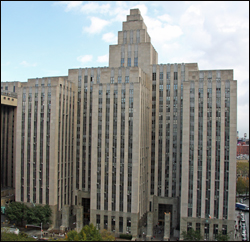 |
| Manhattan criminal courthouse. Source: nyc.gov |
Law enforcement officials charged the Rhode Island hand surgeon in January with Criminal Possession of Stolen Property over $50,000. They arrested Weiss and seized two ancient Greek coins originating from Italy before the coins were sold at the International Numismatic Convention. Weiss faces up to a maximum of 15 years in prison if convicted of the offense.
Because authorities charged Weiss with a felony crime, his case was to be reviewed by a grand jury. Weiss, meanwhile, is presumed innocent.
Some possible legal issues to watch for in the case are discussed here.
CONTACT: www.culturalheritagelawyer.com
Important New Decisions - March 21, 2012
Temporary Maintenance Guidelines Income Cap Raised from $500,000 to $524,000.
The "cap" on each spouses annual income, to be utilized in calculating temporary maintenance orders, has increased from $500,000 to $524,000 effective January 31, 2012 in accordance with Domestic Relations Law § 236 [B][5-a][b][5] . (See Temporary Maintenance Guidelines Worksheet, revised January 31, 2012 at www.nycourts.gov/divorce/TMG-worksheet.pdf or Temporary Spousal Maintenance Guidelines Calculator, revised January 31, 2012 at www.nycourts.gov/divorce/calculator.pdf) Beginning January 31, 2010 and every two years thereafter, the income cap increases by the product of the average annual percentage changes in the consumer price index for all urban consumers (CPI-U) as published by the united states department of labor bureau of labor statistics for the two year period rounded to the nearest one thousand dollars. The office of court administration is required to determine and publish the income cap. See Domestic Relations Law § 236[B], [5-a][b][5].
Downward Modification of Child Support Based on a Loss of Employment Due to Injury Granted Where Father Demonstrated Injuries Severely Limited His Ability to Resume His Veterinary Practice
In Smith v Smith, --- N.Y.S.2d ----, 2012 WL 88100 (N.Y.A.D. 3 Dept.) pursuant to a 2002 judgment of divorce, defendant (mother) was awarded sole custody of the parties' four children. Pursuant to the Child Support Standards Act (DRL 240[1-b] ), plaintiff (father) was directed to pay $2,887 per month in child support based on his imputed income of $160,000 as the sole proprietor of a veterinary practice. The mother, who had no income, was awarded durational maintenance. In 2007, the father was seriously injured in a motor vehicle accident and, in 2009, he sought a downward modification of his child support payments, alleging that there had been a substantial change in circumstances because, among other things, his injuries severely limited his ability to resume his veterinary practice and to perform veterinary services. After a hearing, Supreme Court granted the motion and recalculated the father's monthly child support payments under the Child Support Standards Act to be $634.96 based on the mother's present income of $49,605 from her work as a part-time dental hygienist and the father's income of $24,877.20 from his limited practice and his Social Security disability benefits. The mother appealed, contending that, despite the father's injuries and disability, the motion for a downward modification should have been denied because the father could provide support through some other type of veterinary practice. The Appellate Division affirmed. It observed that she did not present any evidence contradicting the father's proof of his limited ability to work or supporting her claim that he could hire other veterinarians to assist in running his practice. While a request for a downward modification of child support based on a loss of employment due to injury or illness may be denied where the parent seeking the modification still has the ability to provide support through some other type of employment Supreme Court credited the father's testimony that he is no longer able to work full time at his own practice, could not afford to hire another person to assist him in his practice and was not employable at another practice because of his condition. Giving deference to Supreme Court's credibility determinations there was no basis to disturb its determination that the father demonstrated a significant change in circumstances warranting a downward modification of his child support obligation. The Appellate Division rejected the mothers argument that the presumptively correct amount of child support was unjust or inappropriate and that, as a result, the father's personal injury settlement should have been considered in determining his child support obligation The children received derivative Social Security benefits, and the evidence established that most of the father's settlement had already been used to pay the father's child support arrears, continue his child support payments and otherwise mitigate his financial problems.
Appellate Division Generally Accords Deference to Supreme Court's Determination Regarding Amount and Duration of Maintenance as Long as the Court Considers the Statutory Factors and Provides a Basis for its Conclusion
In O’Connor v O’Connor, --- N.Y.S.2d ----, 2012 WL 88226 (N.Y.A.D. 3 Dept.) the parties in this matrimonial action were married in 1986, they had three children (one born in 1990 and twins born in 1992), and plaintiff commenced this action in August 2009 premised upon defendant's abandonment. Following a nonjury trial, Supreme Court, as relevant to this appeal, awarded plaintiff maintenance of $1,000 per month until she was eligible for Social Security retirement benefits in January 2022, subject to earlier termination upon various conditions, including if she remarries or the commencement of her receipt of her share of defendant's pension. In its decision and order, the court also partially granted plaintiff's motion for counsel fees, awarding $7,500 of the over $20,000 in then unpaid counsel fees and disbursements. These awards were included in the April 2011 judgment of divorce. Defendant, challenging the duration of maintenance, appealed from the judgment, which prompted plaintiff to cross-appeal therefrom and to move for an award of appellate counsel fees. Supreme Court, in July 2011, granted plaintiff $900 in counsel fees for making the motion and $9,000 for appellate counsel fees. Defendant appealed from the July 2011 order.
The Appellate Division stated that while its authority is as broad as Supreme Court's regarding maintenance it generally accords deference to Supreme Court's determination regarding the amount and duration of maintenance" 'as long as the court considers the statutory factors and provides a basis for its conclusion. Maintenance is appropriate where, among other things, the marriage is of long duration, the recipient spouse has been out of the work force for a number of years, has sacrificed her or his own career development or has made substantial noneconomic contributions to the household or to the career of the payor. The fact that a wife has the ability to be self-supporting by some standard of living does not mean that she is self-supporting in the context of the marital standard of living. Here, Supreme Court discussed each of the statutory factors. This was a long-term marriage of 24 years and plaintiff was 50 years old. Although she had a marketing degree and had a job related to her degree early in the marriage, she passed on a promotion because defendant would not move, and later she gave up her position in order to raise the parties' children. She has not worked in marketing since early 1992. At the time of the divorce, she worked as a school aide and her earnings for 2009 and 2010 were about $14,000 and $18,000, respectively. Supreme Court accepted her testimony that she would need considerable educational updating of an unknown duration and cost before being able to return to a marketing position or another professional field. Defendant's 2010 income was about $78,854, but Supreme Court noted that he did not work available overtime which, in the prior four years, resulted in income levels between approximately $95,000 and $117,000. Defendant's child support obligation for the oldest child ended in August 2011 and the remaining obligation ceases in June 2013. In light of Supreme Court's discussion of the pertinent factors, the length of the marriage, career sacrifice by plaintiff, large discrepancy in current earning power and plaintiff's age, the Appellate Division was unpersuaded that the duration of maintenance determined by Supreme Court should be modified. It rejected defendants argument that it was error to order him to pay counsel fees for the underlying action and the appeal. It is within the discretionary power of Supreme Court to award counsel fees and, in doing so, "a court should review the financial circumstances of both parties together with all the other circumstances of the case, which may include the relative merit of the parties' positions" ( DeCabrera v. Cabrera-Rosete, 70 N.Y.2d 879, 881 [1987]). Supreme Court discussed the financial position of the parties, including defendant's superior earning capacity, and otherwise adequately explained its reasons for awarding counsel fees. Although plaintiff did not pursue her cross appeal, plaintiff's counsel stated in an affirmation that the cross appeal involved a narrow issue that appellate counsel had indicated did not affect her fee. It found no abuse of discretion by Supreme Court in the award of counsel fees .
Equitable Distribution and Counsel Fees Denied Where Parties Elected Not to Treat Marriage as an Economic Partnership
In Medley v Medley, 2011 WL 6975934 (N.Y.Sup.), 2011 N.Y. Slip Op. 52457(U) (Table, Text in WESTLAW), Unreported Disposition, the action was commenced August 2007 for absolute divorce by Plaintiff, Claudette Medley, against Defendant, Maurice Medley. A divorce was granted in favor of Defendant after inquest on the grounds of constructive abandonment. There were no children of the marriage. A trial was held on the ancillary issues of equitable distribution and counsel fees. The parties were married in a civil ceremony on March 5, 1997, after a brief courtship. At the time of the marriage, Plaintiff was in the United States with temporary legal status and Defendant was an American citizen. Prior to the marriage, each party resided in and owned their own home. Plaintiff's home, 141-15 255th Street, Queens, N.Y. ("255 Street property"), was jointly owned with a friend and Defendant was the sole owner of 130-60 221st Street, Queens, N.Y. ("221 Street property"). The parties agree that they lived together at 130-33 221st Street, Queens, N.Y. ( "130-33 Street property"), from March 2005 until July 7, 2007. The parties' living arrangements between March 1997 and 2005 were disputed and was the core issue at trial. Both parties engaged in real estate investments. Plaintiff as a real estate sales agent and owned real estate businesses. Defendant bought and sold investment properties. Except for one joint ownership, all their investments, businesses were conducted separately by each.
Supreme Court found that Plaintiff migrated to the United States in 1988 under a temporary Visa with a work permit. She was employed in administration at a Hospital. In 1994, Plaintiff purchased the 255 Street property, jointly with a friend. Her friend and co-owner subsequently deceased and the one half share was inherited by her friend's daughter. Upon the death of Plaintiff's friend, the mortgage insurance paid off the mortgage on the 255 Street property. Plaintiff later refinanced the property by herself and solely kept the undisclosed proceeds. It was unclear how Plaintiff, solely, refinanced the joint ownership 255 Street property. The daughter did testify that she was aware the property was refinanced; however, no documents were executed by the daughter nor did she receive any of the undisclosed proceeds. After three months of dating, in early 1997, Plaintiff showed Defendant a letter from Immigration and Naturalization Service ("INS") informing Plaintiff that her Visa status had expired. The parties ensued in a conversation on how to change Plaintiff's status or whether Plaintiff will leave the United States to, what Plaintiff classified as, "her father's farm". After this conversation, the parties immediately planned the wedding. The day before the marriage, at Plaintiff's residence, the parties discussed drafting a pre-nuptial agreement. Plaintiff wrote a handwritten document. The document entitled, Prenuptial Agreement between Maurice Medley and Claudette as of 3/3/97,' states "that neither party would take any legal action to seek the other's assets". The agreement, though not acknowledged, is signed by both parties and dated March 4, 1997. One day later, the parties were married, March 5, 1997. It was undisputed that the parties resided together from March 2005 until July 2007 at the 130-33 Street property. Plaintiff had one child, not of the marriage, who resided with Plaintiff and one other family member. There was no document placed into evidence to show that the parties filed joint tax returns or commingled their incomes and bank accounts. Although no tax records were placed into evidence, as Plaintiff claimed joint filing, she contradicted her testimony by acknowledging that as of 2003 she filed as head of household. Plaintiff filed as head of household to show diminished income so that her son could receive financial aid and a scholarship from the private school he attended in New Jersey. The tuition for the school was approximately $28,000.00 to $30,000.00 annually. As a result of Plaintiff's tax filing and the financial application she misrepresented to the school, her son obtained the scholarship and she paid $2,400.00 annually as a single parent.
Plaintiff obtained a Bachelor of Arts degree from York College in 2004. From 1997 through 2005, she earned approximately $30,000.00 annually from Memorial Sloan Kettering. In 2005, her salary increased to $50,000.00. Plaintiff obtained her real estate license in 1997 and began real estate sales. In addition to Plaintiff's earnings from the hospital, she earned additional income ranging through 2010 from as high as $50,000.00 to low as $2,000.00. Consistent with the document signed on March 4, 2005, Plaintiff kept her income separate and apart from Defendant and some of this income was not disclosed prior to the commencement of this case.
All income received from the properties were kept and used by Defendant towards the mortgages and carrying charges on the properties. Although there was a marriage on paper, the parties communication and financial partnership was non existent. Plaintiff's incomes were either not disclosed or shared. Defendant's income although known was not shared.
The credible evidence showed that the parties lived their lives in a manner consistent with the written document they signed in March 1997. Each engaged in separate investment ventures, buying and selling investment properties and kept all their incomes separate from each other. Plaintiff did not disclose any of her real estate investment income prior to trial to Defendant although she claimed entitlement to Defendant's. Defendant did not claim any entitlement to Plaintiff's income, investments or license claiming this was the intent of the parties. Throughout the marriage, there was no credible evidence that the parties spent any significant time together but rather maintained a separate business lifestyle. At most the parties had a sparse emotional life but it was impacted by a clear separate financial life. What contribution Plaintiff made to the investment property purchased with Defendant's funds was unproven since the record was devoid of any documents to support Plaintiff's claim except her testimony.
The Court found that there were several innuendoes of the purpose and true meaning of the parties nuptial. Their arrangement was a sparse emotional life with no financial partnership. For an approximate ten year marriage, the parties lived together for a total of two years and four months just prior to filing of the action. There was evidence that Plaintiff filed deceptive and misrepresented legal school documents and tax returns. Although the Court would not define or marshal what is a "married life". The cliche "you know it when you see it" could be inferred in this case. These parties engaged in a pattern of behavior that was inconsistent of any semblance of a marriage life in its ordinary and reasonable meaning. Plaintiff failed to present any documentary proof or credible evidence for her claims of entitlement. It was undisputed that during the marriage, Defendant purchased three properties, titled solely in his name. Defendant claimed that Plaintiff failed to meet her burden to establish that she made any contribution to these properties, thus warranting an equitable distribution of the value of these real properties. Defendant made no claim of an equitable distribution of Plaintiff's businesses or license.
Looking to DRL 236(B)(1)(c), it was clear that all property acquired during a marriage acquired by either spouse, with the exception of property in specifically delineated categories, is considered to be marital property. In this matter, Defendant purchased the Dean Street property, the DeCosta Avenue property, and the 130-33 Street property, during the marriage in 1999, 2001 and 2005, respectively. Pursuant to the statutory presumption, all three properties are deemed to be marital property. In addition to the real property acquired during the marriage, both parties also acquired retirement benefits throughout the duration of the marriage. The Court found that to the extent the benefits were accrued during the marriage, the retirement benefits were marital property.
Turning to the unique circumstances of this case, the Court considered the economic partnership, as created by the parties in this marriage. While the living arrangements of the parties from March 1997 through May 2005 was disputed, it was undisputed that from the outset of the marriage the parties agreed not to treat the marriage as an economic partnership. While the document signed on March 4, 1997, was not a pre-nuptial agreement, as it did not satisfy the requirements for a pre-nuptial agreement as required by DRL 236(B)(3), the written signed document evinced the intent of the parties to forego any legal claim each party may have to the other party's assets in the event that the marriage was unsuccessful. While the Plaintiff testified that the agreement only concerned the property owned prior to the marriage, the evidence presented established that the parties maintained separate finances throughout the life of the marriage. Although Plaintiff testified that the parties held one joint account until approximately 2004, she failed to present evidence to establish the existence of that or any joint account. Plaintiff did not contribute to the down payment or mortgage payments nor made any spousal or homemaker contribution on any of the properties purchased by Defendant. Moreover, while Plaintiff testified that the parties filed joint tax returns during the early years of the marriage, until approximately 2004, she failed to present any joint tax returns for any year during the marriage.
In addition to maintaining separate bank accounts, the parties also conducted their real estate investments and business endeavors separately. The parties' separate real estate dealings evinced an intention to maintain separate financial accounts and investments consistent with the document written and signed on March 4, 1997. Plaintiff's testimony of the parties' intent was inconsistent with the parties' actions. The manner in which the parties conducted their real estate endeavors was inconsistent with the economic partnership theory.
Supreme Court observed that Courts have held in matrimonial proceedings where parties conduct themselves in a manner inconsistent with the economic partnership, the Court may find that equitable distribution of property is not warranted (see Duspiva v. Duspiva, 181 A.D.2d 810, [2d Dept 1992]; Miller v. Miller, 4 AD3d 718, [3d Dept 2004]; Galvin v. Galvin, 20 AD3d 550, [2d Dept 2005] ). The parties began their marriage with an agreement that neither party would pursue legal action to claim the other party's assets. For the duration of the marriage, the parties lived in a manner consistent with the terms of that the document they wrote and signed. Although the parties resided in the same residence, 130-33 Street property, the Court found that the parties continued to conduct themselves in a manner consistent with the terms of the document signed on March 4, 1997, and conducted themselves in a manner inconsistent with the typical economic partnership and, therefore, equitable distribution of the property was not warranted.
Plaintiff presented evidence and testimony to establish that she purchased furniture for the residence at 130-33 221st Street in the sum of $11,734.23. Plaintiff further testified that although she left the residence in July 2007 Defendant did not allow her to remove the furniture from the residence. In light of the parties' agreement and conduct consistent with the agreement, the Court finds that the furniture purchased for the 130-33 221st Street residence is property of Plaintiff. However, as the furniture has remained in Defendant's possession since 2007, Defendant had to pay Plaintiff for the cost of the furniture. Defendant was directed to pay Plaintiff $11,734.23 for the furnishings in the residence.
Plaintiff sought counsel fees. According to Plaintiff's testimony, in 2009, she earned approximately $70,000.00 from her employment at the hospital and an additional $20,000.00 from her real estate businesses. Additionally, she testified that for the year 2010, she anticipated earning approximately $70,000.00 from the hospital and has already derived $15,000.00 from her real estate businesses. Plaintiff earned a minimum of $85,000.00 in 2010. Defendant's Amended Statement of Net Worth indicated that Defendant's monthly income was $12,707.44. While Defendant's income was greater than that of Plaintiff, throughout the duration of the marriage, the parties maintained separate finances and Plaintiff was able to meet her financial obligations without the assistance of Defendant. Considering the unique circumstances of this case, Plaintiff's request for counsel fees was denied.
Thứ Ba, 20 tháng 3, 2012
Ithaca DWI Defense: It Can Be as Simple or as Complicated as a Specific Day
We mark the seasons, the days of the week, and especially the holidays by specific dates. Apparently time passes by more quickly as we age. I almost stopped my wife from taking down the tree this past year because I thought wow Christmas came so fast this year why bother (let's just keep it up).
What does all this have to do with criminal law or even DWI defense?
Well imagine we are sitting in a Courtroom and the prosecutor is about to begin their opening statement in a DWI case, they will have a theme, it was New Year's eve, it was Super Bowl Sunday, it was a Holiday! And folks what do we do on Holy-days, we Celebrate! We celebrate special occasions with spirits (both real and imagined). Everyone knows this, it is common knowledge, which makes it that much more relevant. Get it? drinking to excess naturally runs with this special date/day.
So the defense of a DWI has to take this into consideration. To negate it wouldn't be smart. Like all things, everything must be considered when planning and executing a defense.
I prefer my DWIs on non-holidays if possible. It may seem like an innocuous point but people are people. Defending DWI is just better any old day just more difficult on that special occasion.
Lawrence (Larry) Newman, D.C., J.D.
Doctor of Chiropractic
Attorney at Law
504 N. Aurora St.
Ithaca, NY 14850
http://www.ithacadwi.com
What does all this have to do with criminal law or even DWI defense?
Well imagine we are sitting in a Courtroom and the prosecutor is about to begin their opening statement in a DWI case, they will have a theme, it was New Year's eve, it was Super Bowl Sunday, it was a Holiday! And folks what do we do on Holy-days, we Celebrate! We celebrate special occasions with spirits (both real and imagined). Everyone knows this, it is common knowledge, which makes it that much more relevant. Get it? drinking to excess naturally runs with this special date/day.
So the defense of a DWI has to take this into consideration. To negate it wouldn't be smart. Like all things, everything must be considered when planning and executing a defense.
I prefer my DWIs on non-holidays if possible. It may seem like an innocuous point but people are people. Defending DWI is just better any old day just more difficult on that special occasion.
Lawrence (Larry) Newman, D.C., J.D.
Doctor of Chiropractic
Attorney at Law
504 N. Aurora St.
Ithaca, NY 14850
http://www.ithacadwi.com
U.S. House Passes Foreign Cultural Exchange Jurisdictional Immunity Clarification Act
 |
| Congressman Steve Chabot |
The U.S. House of Representatives by voice vote yesterday passed the Foreign Cultural Exchange Jurisdictional Immunity Clarification Act (FCEJICA). The legislation seeks to protect foreign artwork on loan to American museums by clarifying a part of the Foreign Sovereign Immunities Act (FSIA).
The legislation was introduced by Judiciary Committee member Rep. Steve Chabot (R-OH) on February 24 and co-sponsored by Rep. John Conyers (D-MI), Rep. Lamar Smith (R-TX), and Rep. Steve Cohen (D-TX). Their intent is to have a law that encourages more foreign lending of art to America without the fear of lawsuits.
Under the current federal statute known as Immunity from Seizure Under Judicial Process of Cultural Objects Imported for Temporary Exhibition or Display (the Immunity from Seizure Act (IFSA), 22 U.S.C. § 2459), foreign lenders are encouraged to lend cultural objects to museums in the United States without risk that those objects will become targets of litigation while on American soil. The statute protects imported objects determined by the State Department to be (1) of cultural significance, (2) intended for temporary, nonprofit exhibition, and (3) in the national interest. Museums importing objects into the U.S. for temporary display must apply for this legal protection. The notice of immunity is then published in the Federal Register.
The FSIA, meanwhile, is a law that generally protects foreign states from lawsuits. The FSIA embodies a long held principle of American jurisprudence. But the law has been interpreted to sometimes grant jurisdiction to the courts over foreign governments when their artwork is displayed in the U.S. because such loans are deemed “commercial activity.” Specifically, 28 U.S.C. 1605(a)(3) of the FSIA states:
“A foreign state shall not be immune from the jurisdiction of courts of the United States or of the States in any case . . . in which rights in property taken in violation of international law are in issue and that property or any property exchanged for such property is present in the United States in connection with a commercial activity carried on in the United States by the foreign state; or that property or any property exchanged for such property is owned or operated by an agency or instrumentality of the foreign state and that agency or instrumentality is engaged in a commercial activity in the United States.”
By way of example, in the 2005 case of Malewicz v. City of Amsterdam the heirs of Kazimir Malevich sued Amsterdam in federal court in Washington, DC to either recover artworks that the city’s Stedelijk Museum loaned to American museums or to acquire $150 million in damages. The heirs claimed that the foreign museum unlawfully obtained the paintings. Amsterdam argued that the Immunity from Seizure Act protected it from a lawsuit, but the federal district court ruled that Amsterdam had engaged in “commercial activity” under the FSIA by loaning the art to American institutions. While IFSA may protect artwork from seizure, the FSIA did not protect Amsterdam from related damages said the court. So the lawsuit moved forward.
The FCEJICA was introduced in order to remedy potential conflicts between IFSA and the FSIA. The bill adds a new section to the FSIA that protects foreign nations from lawsuits in American courts related to loaned artwork. The bill that passed the Judiciary Committee on February 28 and the full House on March 19 states:
“If a work is imported into the United States from any foreign country pursuant to an agreement that provides for the temporary exhibition or display of such work entered into between a foreign state that it is the owner or custodian of such work and the United States or one or more cultural or educational institutions within the United States, [and] the President, or the President’s designee, has determined . . . that such work is of cultural significance and the temporary exhibition or display of such work is in the national interest; and the notice thereof has been published . . . any activity in the United States of such foreign state, or of any carrier, that is associated with the temporary exhibition or display of such work shall not be considered to be commercial activity by such foreign state . . . .”
The bill adds that art stolen by the Nazis shall not be protected from legal claims filed in federal court.
A House report attached to the bill notes that "the intent of IFSA is being frustrated by the Foreign Sovereign Immunities Act (FSIA). Recent court decisions have interpreted a provision of FSIA in a manner that opens foreign governments up to the jurisdiction of U.S. courts if foreign government-owned artwork is present in the United States in connection with a commercial activity and there is a claim that the artwork was taken in violation of international law." The report adds: "This has led, in many instances, to foreign governments declining to export artwork and cultural objects to the United States for temporary exhibition or display. Future cultural exchanges may be seriously curtailed by foreign lenders' unwillingness to permit their artwork and other cultural objects to travel to the United States. In order to keep the exchange of foreign government-owned cultural objects flowing, this legislation clarifies the relationship between the immunity provided by IFSA and the exceptions to sovereign immunity provided for in FSIA."
The Congressional Budget Office reported that enactment of the legislation "would have no significant impact on the federal budget."
The bill now goes to the Senate for its consideration.
This link contains a video of Judiciary Committee Chairman Rep. Lamar Smith's remarks on the floor of the House.
CONTACT: www.culturalheritagelawyer.com
Thứ Hai, 19 tháng 3, 2012
Tests, Tests, and Still More Tests: Do I Have To Take Police Tests?
The police (including troopers, deputies) are worse than teachers when it comes to giving tests. In college you usually get time to study. You may also receive an outline, a list of books, a course syllabus, and/or a list of potential testable subject matter. Not so with law enforcement.
Police/law enforcement tests given at roadside or back at the station are some of the most difficult tests you will ever take because:
You don't know what's on the test.
You can't prepare for the test.
You can't practice the test.
You can't take the test over.
You don't really know if you passed or why you failed the test?
In fact many tests may be graded upon the officer's subjectivity (how they perceive your responses to their commands, directions, and instructions). What if they are poor instructors? What if they are unclear in their communication?
On top of all of that some police tests are just made up. They have no standardization. For the record there are only three SFSTs (Standardized Field Sobriety Tests): the HGN (horizontal gaze nystagmus), the walk and turn, and the one leg stand.
Your Performance
You probably will not be at your best physically or mentally when taking them.
It may be late at night, you may tired, you may be scared, you may be anxious, and you may be under the influence of something.
So what tests must you take:
Alco-sensor Test (out in field breath test): Don't have to take but if you don't it is a traffic violation.
Field Sobriety Tests: Don't have to take them at all.
Breath Test: Have to take it (implied consent law) but if you decline license ramifications (revocation for one year)
Blood Test: Have to take it (will be forced if a personal injury accident) but you can decline (if not an accident with injuries to others) and face license revocation.
Law Offices of Lawrence Newman
Larry Newman, Attorney and Counselor at Law
504 North Aurora Street
Ithaca, NY 14850
607-229-5184
http://www.ithacadwi.com
Police/law enforcement tests given at roadside or back at the station are some of the most difficult tests you will ever take because:
You don't know what's on the test.
You can't prepare for the test.
You can't practice the test.
You can't take the test over.
You don't really know if you passed or why you failed the test?
In fact many tests may be graded upon the officer's subjectivity (how they perceive your responses to their commands, directions, and instructions). What if they are poor instructors? What if they are unclear in their communication?
On top of all of that some police tests are just made up. They have no standardization. For the record there are only three SFSTs (Standardized Field Sobriety Tests): the HGN (horizontal gaze nystagmus), the walk and turn, and the one leg stand.
Your Performance
You probably will not be at your best physically or mentally when taking them.
It may be late at night, you may tired, you may be scared, you may be anxious, and you may be under the influence of something.
So what tests must you take:
Alco-sensor Test (out in field breath test): Don't have to take but if you don't it is a traffic violation.
Field Sobriety Tests: Don't have to take them at all.
Breath Test: Have to take it (implied consent law) but if you decline license ramifications (revocation for one year)
Blood Test: Have to take it (will be forced if a personal injury accident) but you can decline (if not an accident with injuries to others) and face license revocation.
Law Offices of Lawrence Newman
Larry Newman, Attorney and Counselor at Law
504 North Aurora Street
Ithaca, NY 14850
607-229-5184
http://www.ithacadwi.com
Chủ Nhật, 18 tháng 3, 2012
Some Errors In Content and Service Of a Notice Of Appeal May Be Waived Or Excused
CPL 60.10 (a) provides that A party seeking to appeal from a judgment or a sentence must
Even when there has been a failure to comply with these requirements as to a notice of appeal, it is possible that the defendant can still appeal. Thus, for example, in People v Syville (15 NY3d 391 [2010])the Court of Appeals held that "[w]here an attorney has failed to comply with a timely request for the filing of a notice of appeal and the defendant alleges that the omission could not reasonably have been discovered within the one-year period, the time limit imposed in CPL 460.30 should not categorically bar an appellate court from considering that defendant's application to pursue an untimely appeal." Instead, the Court held that the common-law writ of error coram nobis affords the appropriate avenue for relief for such a violation and such a writ may be sought and obtained, as in Mr. Syville's case, about a decade after the imposition of sentence.
Two recent decisions of the Appellate Division, Fourth Department, show other ways in which appeals may proceed despite errors with respect to the notice of appeal. In People v Dizak (2012 NY Slip Op 01907 [4th Department 3/16/12]), as in Syville, there was an apparent failure to timely serve the notice of appeal. Rather, than file a motion for a writ of error coram nobis, as suggested by the Court of Appeals in Syville, Mr. Dizak perfected his appeal. The Monroe County District Attorney, in its Respondent's brief contended that the appeal had to be dismissed because Dizak failed to serve his notice of appeal in a timely manner. The Appellate Division, refused to dismiss for two reason, holding that
Thus, the Court held both that a prosecutor waives the requirement of timely service of a notice of appeal by failing to move to dismiss on that ground and that prejudice must be demonstrated.
In People v Mitchell (2012 NY Slip Op 01897 [Fourth Department 3/16/12]) the notice of appeal recited an incorrect date on which judgment was rendered. The Fourth Department, excused this error holding that
Although both Mr. Mitchell and Mr. Dizak were permitted to proceed with their appeals despite defects in the content or service of their notices of appeals, it is risky to count on either waiver by the prosecutor or the exercise of interest of justice jurisdiction by the appellate court. Thus, counsel should first check to insure the accuracy of the information in the notice of appeal and then timely serve the notice, with proof of such service.
within thirty days after imposition of the sentence or, as the case may be, within thirty days after service upon such party of a copy of an order not included in a judgment, file with the clerk of the criminal court in which such sentence was imposed or in which such order was entered a written notice of appeal, in duplicate, stating that such party appeals therefrom to a designated appellate court.
Even when there has been a failure to comply with these requirements as to a notice of appeal, it is possible that the defendant can still appeal. Thus, for example, in People v Syville (15 NY3d 391 [2010])the Court of Appeals held that "[w]here an attorney has failed to comply with a timely request for the filing of a notice of appeal and the defendant alleges that the omission could not reasonably have been discovered within the one-year period, the time limit imposed in CPL 460.30 should not categorically bar an appellate court from considering that defendant's application to pursue an untimely appeal." Instead, the Court held that the common-law writ of error coram nobis affords the appropriate avenue for relief for such a violation and such a writ may be sought and obtained, as in Mr. Syville's case, about a decade after the imposition of sentence.
Two recent decisions of the Appellate Division, Fourth Department, show other ways in which appeals may proceed despite errors with respect to the notice of appeal. In People v Dizak (2012 NY Slip Op 01907 [4th Department 3/16/12]), as in Syville, there was an apparent failure to timely serve the notice of appeal. Rather, than file a motion for a writ of error coram nobis, as suggested by the Court of Appeals in Syville, Mr. Dizak perfected his appeal. The Monroe County District Attorney, in its Respondent's brief contended that the appeal had to be dismissed because Dizak failed to serve his notice of appeal in a timely manner. The Appellate Division, refused to dismiss for two reason, holding that
"[T]he People waived any objection to defendant's failure to serve the notice of appeal by responding to his appeal on the merits rather than fhttp://www.blogger.com/img/blank.gifiling a motion to dismiss the appeal at some earlier juncture . . . The People, moreover, have failed to demonstrate any prejudice as a result of defendant's alleged failure to comply with CPL 460.10 (1) (b)" (People v Sayles, 292 AD2d 641, 642 n, lv denied 98 NY2d 681).
Thus, the Court held both that a prosecutor waives the requirement of timely service of a notice of appeal by failing to move to dismiss on that ground and that prejudice must be demonstrated.
In People v Mitchell (2012 NY Slip Op 01897 [Fourth Department 3/16/12]) the notice of appeal recited an incorrect date on which judgment was rendered. The Fourth Department, excused this error holding that
Defendant's notice of appeal recites the correct indictment number, however, and thus we exercise our discretion, in the interest of justice, and treat the notice of appeal as valid (see CPL 460.10 [6]).
Although both Mr. Mitchell and Mr. Dizak were permitted to proceed with their appeals despite defects in the content or service of their notices of appeals, it is risky to count on either waiver by the prosecutor or the exercise of interest of justice jurisdiction by the appellate court. Thus, counsel should first check to insure the accuracy of the information in the notice of appeal and then timely serve the notice, with proof of such service.
Đăng ký:
Bài đăng (Atom)
Bài đăng phổ biến
-
Provisions in Settlement Agreement Which Govern Award of Attorney's Fees, Rather than Statutory Provisions, Control. In Berns v Halberst...
-
The Cultural Property Advisory Committee will be holding public sessions on October 12 and October 14, 2010 to consider renewing the cultura...
-
For what its worth, the BG&S website has some articles I've authored, each of which should have been published by now in "The S...
-
I have just turned the magic age of 48. Getting a bit more grey, having a few more excuse me "sirs" thrown my way pauses me to th...
-
 I'm living my dream. When I told my friends five years ago where I was moving they recommended I see a therapist. I escaped the big city...
 -
In People v Helmer ( 2009 NY Slip Op 04830 4th Dept 6/12/09) the sole issue was whether the victim was a stranger to defendant for purpose...
-
The need to renew previously made requests has been in the news recently with lots of reminders that if you don't a request to be on the...
-
 Judge Nelson Roman, Deputy Mayor Carol Robles-Roman, Is Approved For Seat in Southern District CourtSenate Committee Approves Roman for Southern District By Mike Paquette New York Law Journal March 4, 2013 LINK Cover Story: Hispanic Power ...
 -
Let us thank the American Bar Association for giving the green light late last year to allow the corporations and corrupt TARP receiving ban...
-
re-posted from Parentadvocates.org LINK The subtitle of the article on the July 29, 2012 New York Post: "Judges' pals cashing in...
