Hiển thị các bài đăng có nhãn prosecutions. Hiển thị tất cả bài đăng

Chủ Nhật, 12 tháng 5, 2013

Government Petitions to Dismiss Charges in Korean Currency Case

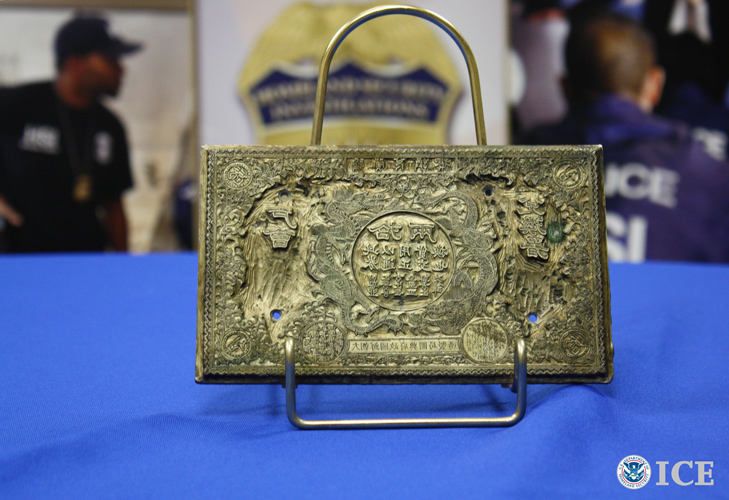
Prosecutors in Detroit, Michigan on Friday moved to dismiss the receiving and transporting stolen property charges against Wong Young Youn.  Earlier this year it was reported that the defendant was cooperating with authorities in the Korean currency plate case as officials pursued similar charges against Midwest Auction Galleries owner James Amato. Now U.S. Attorney Barbara McQuade (right) seeks to dismiss Youn's case without prejudice.

A defendant is presumed innocent unless the prosecution proves guilt beyond a reasonable doubt

Police arrested the pair for their alleged role in the possession and sale of a an 1893 Hojo currency plate, claimed by prosecutors to be stolen from Korea and to be one of only three plates in existence. The government has not yet cited the legal authority that supports Korea's ownership of the plate. Details of the two year investigation can be found in a prior January 2013 blog post.

Prosecutors write in last weeks' court filing that they require additional time to prepare the case in order
(1) to develop and obtain evidence sufficient to establish defendant’s guilt beyond a reasonable doubt;  
(2) to investigate the full extent of the offense(s) in question and identify all other individuals who should be held criminally responsible for the offense(s); or 
(3) to decide whether criminal prosecution of defendant for the offense(s) in question is in the public interest.
The dismissal of Youn's case would leave Amato as the only one charged in the pending in the case. A dismissal without prejudice, nevertheless, would allow the government to reinstate criminal charges against Youn at a future date.

[UPDATE May 22, 2013:  The court on May 13, 2013 granted the dismissal of the charge without prejudice.]

This post is researched, written, and published on the blog Cultural Heritage Lawyer Rick St. Hilaire at culturalheritagelawyer.blogspot.com. Text copyrighted 2010-2013 by Ricardo A. St. Hilaire, Attorney & Counselor at Law, PLLC. Any unauthorized reproduction or retransmission of this post is prohibited. CONTACT INFORMATION: www.culturalheritagelawyer.com

Thứ Sáu, 5 tháng 4, 2013

Peruvian Artifacts Trafficking Prosecution is Worth Watching


A federal grand jury on Wedesday charged four defendants--Javier Abanto-Sarmiento and Alfredo Abanto-Sarmiento of Trujillo, Peru and Cesar Guarderas and Rosa Isabel Guarderas of West Valley City, Utah--with illegally smuggling and transporting Peruvian artifacts. An indictment is not a finding of guilt, and a defendant is presumed innocent unless proven guilty.

An undercover Immigration and Customs Enforcement (ICE) Homeland Security Investigations (HSI) agent cracked open the case last fall when he arranged the purchases of a dozen illegal Peruvian artifacts totaling $23,000, according to an amended complaint filed on March 25. The complaint explains that the purchases uncovered an alleged conspiracy:
Undercover telephone, email,and in-person discussions conducted concurrent to the purchaseof artifacts further corroborates [Javier] Abanto-Sarmiento's and [Cesar] Guarderas' conspiracyin trafficking of Peruvian artifacts. Several discussions have resultedin declarations of the following:Guarderas stating Abanto-Sarmiento has access to over one hundred (100) piecesof pottery in Peru and is willing to ship them to the U.S.; Abanto-Sarmiento statinghe bribes officials in Peru in order to get the artifactsout of Peru; Guarderas statingAbanto-Sarmiento knows where to look for potteryburied in the ground and that he acquires some of his pottery via this method; Guarderas stating Abanto-Sarmiento has a contactwith the Instituteof National Culture in Peru who providesAbanto-Sarmiento with authenticcertifications stating all of his pottery are replicas; and Guarderas statingAbanto-Sarmiento uses these authentic certifications  to illegally export genuineartwork out of Peru.
The present case differs from U.S. v. Perezwhere the defendant was found guilty of illegally importing artifacts from El Salvador in violation of the Cultural Property Implementation Act's (CPIA) import controls. An April 3, 2013 HSI news release recites, "In 1997, the United States and Peru entered into a bilateral agreement prohibiting the importation into the United States of specific cultural property originating from Peru, including artifacts and ethnological religious objects." But the cultural property import restriction on Peruvian cultural heritage--put in place by a Memorandum of Understanding (MoU) adopted pursuant to the CPIA--is not alleged to have been violated. Prosecutors have not charged the defendants with that section of 18 U.S.C. 545 that says "[w]hoever fraudulently or knowingly imports or brings into the United States, any merchandise contrary to law" is guilty of a crime. The current defendants instead are charged with knowingly and willfully smuggling "merchandise which should have been invoiced, or did make out or pass, or attempt to pass, through the customhouse any false, forged, or fraudulent invoice, or other document, or paper ...." The indictment does not allege further specifics.

HSI cultural property cases often follow a pattern of "seize and send,"whereby illegal cultural objects are seized by authorities and then sent back to their country of origin without criminal prosecution in the United States of the traffickers. In recent years, ICE's seize and send policy has repatriated several art and artifacts to Peru, including in 2012, 2011, and 2010, and 2009.  But it is not often that criminal charges are filed against alleged antiquities traffickers. That is why the Abanto-Sarmiento case is worth watching.

This post is researched, written, and published on the blog Cultural Heritage Lawyer Rick St. Hilaire at culturalheritagelawyer.blogspot.com. Text copyrighted 2010-2013 by Ricardo A. St. Hilaire, Attorney & Counselor at Law, PLLC. Any unauthorized reproduction or retransmission of this post is prohibited. CONTACT: www.culturalheritagelawyer.com.


Thứ Năm, 21 tháng 2, 2013

Defendant Cooperates in Korean Currency Plate Case


Wong Young Youn, charged with violations of the National Stolen Property Act (NSPA) for allegedly receiving and transporting a stolen Korean Hojo currency plate, is cooperating with federal authorities. His testimony supported the February 12, 2013 arrest of James Amato in Michigan. Amato is the owner of Midwest Auction Galleries. Both defendants' cases are before the federal district court in Detroit.

Amato is charged with two counts of violating the National Stolen Property Act (NSPA 18 U.S.C. § 2314 and 18 U.S.C. § 2315) and with making a materially false statementand providing a falsedocument knowing the same to contain a materially  false,fictitious,or fraudulent statementsor entry in violationof 18 U.S.C. § 1001.
 
The Hojo currency plate is said to be one of three currency plates in existence from the 1890's.
Court records allege that Amato sold the currency plate in 2010 to Youn for $35,000 despite efforts by the Korean Embassy and the U.S. State Department to warn them that the sale could violate the NSPA.

U.S. Immigration and Customs Enforcement's Homeland Security Investigations (HSI) issued a customs summons to Midwest Auction Galleries on June 29, 2012. In response, the gallery "provided an invoice stating the item  was  purchased  by  'Weng Liang' of 'Hunan, China,' for $9,990, according to an HSI affidavit filed with the court this month. The affidavit reveals that Youn allegedly told HSI officials in January that he himself bought the currency plate and that he does not know a person named Weng Liang.

All defendants are presumed innocent unless and until the prosecution proves guilt beyond a reasonable doubt.

This post is researched, written, and published on the blog Cultural Heritage Lawyer Rick St. Hilaire at culturalheritagelawyer.blogspot.com. Text copyrighted 2012 by Ricardo A. St. Hilaire, Attorney & Counselor at Law, PLLC. Any unauthorized reproduction or retransmission of this post is prohibited. CONTACT: www.culturalheritagelawyer.com

Thứ Năm, 31 tháng 1, 2013

HSI Alleges Receiving Stolen Korean Currency Plate Was Like "Winning a Lottery"

Michigan authorities have charged Wong Young Youn with violations of the National Stolen Property Act (NSPA) for allegedly receiving and transporting a stolen Hojo currency plate purchased for the price of $35,000.

A charge is simply a mechanism for initiating the criminal court process.  A person is presumed innocent of violating 18 USC 2314 and 2315 (the NSPA) unless the prosecution proves that the defendant is guilty beyond a reasonable doubt of receiving and transporting in interstate commerce an item valued more than $5000 knowing that the item was stolen.

An unsealed affidavit filed on December 19, 2012 by a special agent of Immigration and Customs Enforcement's Homeland Security Investigations (HSI) makes the following factual allegations:
  • In April 2010, a Michigan internet auction house listed an "Exceptional Inscribed Korean Bronze Plaque."  Both the South Korean embassy and the U.S. Department of State alerted the auctioneer that the plaque could have been taken from the Republic of Korea illegally.  HSI identified the bidder, who was a woman from Flushing, New York.
  • The Cultural Heritage Administration in Korea in December 2010 provided information that the plaque was a Hojo currency note--a plate used to produce money--from the 19th century Joseon Dynasty, an item of heritage whose "legitimate export would have been 'hardly likely.'"
  • HSI received information in August 2012 from an expert at a Georgia college that the currency plate was "historically and culturally significant not only because of its place in the modern transformation of the Korean monetary system but also because it is a tangible artifact of the extremely difficult socio-cultural transformations of nineteenth and twentieth-century Korean society ...." The professor found a YouTube video of the plaque.  HSI identified the man in the video with the currency plate as Youn.
  • HSI contacted the purchaser in late 2012 and learned that she opened accounts on internet web sites to buy Korean objects on behalf of Youn.  Youn reimbursed the purchaser.
  • The purchaser gave HSI a statement in December 2012 saying that she bought the currency plate at Youn's request and with Youn sitting at her side during the auction.  She reported that the Korean consulate in Washington, DC soon contacted her and told her not to pay the $35,000 price since the currency plate was under investigation.  The purchaser called Youn, who said he would respond to the consulate. Youn then approached the purchaser and was excited.  "Youn likened the plaque to winning a lottery because a price could be negotiated with the Korean Government as the Korean government was interested in returning the plaque to Korea," according to HSI's affidavit. Youn reportedly learned that the object was likely stolen by a soldier during the Korean War.
  • The purchaser told HSI that she wired partial payment to the auctioneer and that Youn himself delivered the final payment when he picked up the plate.  Youn then contacted the media and did an interview with a Korean television station in May 2010.
HSI charged Youn in the Eastern District Court of Michigan.  The court set the defendant's conditions of release on January 29, 2013 and scheduled a preliminary hearing for February 13.

The government has thus far sketched the factual basis to argue that the currency plate was stolen property.  It has not yet described the Korean ownership law violated that would support the present prosecution under the NSPA.

This post is researched, written, and published on the blog Cultural Heritage Lawyer Rick St. Hilaire at culturalheritagelawyer.blogspot.com. Text copyrighted 2012 by Ricardo A. St. Hilaire, Attorney & Counselor at Law, PLLC. Any unauthorized reproduction or retransmission of this post is prohibited. CONTACT: www.culturalheritagelawyer.com

Thứ Ba, 22 tháng 1, 2013

Prison Terms Ordered in Matisse Art Theft Case

Judge Donald M. Middlebrooks today ordered prison time for the pair charged with illegal possession, transportation, and sale of Henri Matisse's Odalisque in Red Pants.

The federal court in the southern district of Florida sentenced Pedro Antonio Marcuello Guzman to 33 months incarceration followed by three years of supervised release.  Maria Martha Elisa Ornelas Lazo was sentenced to 21 months in prison followed by three years of supervised release.

Click here for details about this theft, swap, and fence art crime, which tells of the missing painting from the Caracas Museum of Contemporary Art and the Federal Bureau of Investigation (FBI) undercover investigation that recovered the masterwork.


This post is researched, written, and published on the blog Cultural Heritage Lawyer Rick St. Hilaire at culturalheritagelawyer.blogspot.com. Text copyrighted 2012 by Ricardo A. St. Hilaire, Attorney & Counselor at Law, PLLC. Any unauthorized reproduction or retransmission of this post is prohibited. CONTACT: www.culturalheritagelawyer.com

Thứ Ba, 8 tháng 1, 2013

U.S. v. Khouli et al. Update: Motion to Defer Prosecution Ushers Rapid End to Antiquities Case

Prosecutors in Brooklyn last week entered into a deferred prosecution agreement with defendant Joseph Lewis, II, completing the alleged antiquities trafficking case of United States v. Khouli et al.  One co-defendant's sentence to house arrest in November for smuggling and making  false statements, and a second co-defendant's plea in December to misdemeanor accessory after the fact, with a sentence of a $1000 fine, appear to have accelerated the case to its rapid conclusion.

A deferred prosecution typically involves an agreement between the prosecution and defense whereby the case is suspended for a period of time and upon certain conditions such as good behavior.  Court documents do not reveal the specific agreement in the case involving Lewis, but one document suggests that the deferral period is for one year beginning January 3, 2013.  At the end of the deferral period, the case is dismissed.  For all intents and purposes, a deferred prosecution generally ends the criminal prosecution.  No conviction is entered.

Last year at this time, Lewis' attorney filed a motion to dismiss arguing that the government could not prove its case.

A fourth co-defendant, Ayman Ramadan, remains a fugitive.  However, the completion of the antiquities case in the Eastern District of New York suggests that the fugitive warrant may not be executed by the U.S. Attorney if he were to be arrested.


This post is researched, written, and published on the blog Cultural Heritage Lawyer Rick St. Hilaire at culturalheritagelawyer.blogspot.com. Text copyrighted 2012 by Ricardo A. St. Hilaire, Attorney & Counselor at Law, PLLC. Any unauthorized reproduction or retransmission of this post is prohibited. CONTACT: www.culturalheritagelawyer.com

Thứ Ba, 25 tháng 12, 2012

U.S. v. Perez: Criminal Penalties for Violating Convention on Cultural Property Implementation Act


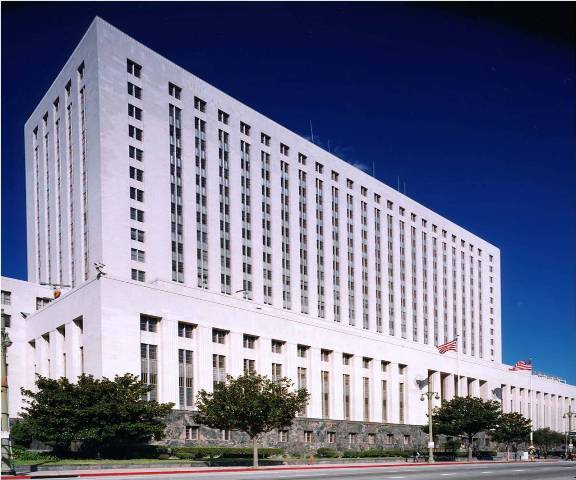
As 2012 comes to a close, a case concluded in the Central District of California this year is important to highlight.  It is the federal district court matter of United States v. Perez(07-CR-499 C.D.Ca. 2007), prosecuted by U.S. Attorney André Birotte, Jr.'s office.

Source: U.S. Attorney's Office, C.D.CA
The case confirms that the federal anti-smuggling statute, 18 U.S.C. 545, can punish cultural property smugglers who illegally import archaeological or ethnological material in violation of the Convention on Cultural Property Implementation Act (CPIA).

It has been suggested over the years that a person who violates the CPIA’s cultural property import restrictions faces the civil remedy of seizure of the cultural object but not criminal prosecution.  So if a person smuggles an archaeological object into the United States from Cyprus, for example—a country that has a bilateral agreement with the U.S. under the CPIA—the smuggler cannot be indicted or go to prison, according to this argument.  Only the smuggled artifact can be taken away.  I believe that this interpretation of law is incorrect.

In a paper presented to the International Council of Museums Conservation Committee in 2007 and referenced by Patty Gerstenblith, “Controlling the International Market in Antiquities: Reducing the Harm, Preserving the Past,” 8Chicago Journal of International Law169 (2007), I stated that the CPIA’s “civil remedy of forfeiting an unlawfully imported object is arguably complemented by the smuggling statute’s criminal remedy of prosecuting the perpetrator. That is because the federal anti-smuggling law declares that a person is subject to criminal prosecution when he fraudulently or knowingly imports an item ‘contrary to law.’”  This argument, that an individual can face conviction for smuggling as a result of violating the CPIA's import restrictions is supported by the conviction in the Perez case.

In that case, federal officials discovered that Robert Perez was selling pre-Columbian and pre-Hispanic pots imported illegally into the United States from El Salvador.  The U.S. has import restrictions on cultural property from El Salvador as a result of a bilateral agreement with that nation, authorized by the CPIA.  The grand jury indicted Perez on one count of smuggling under 18 U.S.C. 545, charging the following:

“On or about December 11, 2002, in Orange County, within the Central District of California, defendant ROBERT PEREZ didfraudulently and knowingly sell merchandise, namely, one melon-shaped, pre-Hispanic ceramic bowl, after the merchandise's importation into the United States, knowing said merchandise had been imported into the United States contrary to law.Specifically, on said date, defendant PEREZ knowingly sold said ceramic bowl knowing that it was a pre-Hispanic archeological material that had been imported into the United States from El Salvador contrary to law, namely, without first obtaining a valid export certificate from the country of El Salvador, in violation of [the CPIA] Title 19, United States Code, Section 2606(a).”

The case concluded with a plea agreement in January 2012, supporting the opinion that the CPIA's import restrictions on cultural property may be enforced by federal criminal statutes.


This post is researched, written, and published on the blog Cultural Heritage Lawyer Rick St. Hilaire at culturalheritagelawyer.blogspot.com. Text copyrighted 2012 by Ricardo A. St. Hilaire, Attorney & Counselor at Law, PLLC. Any unauthorized reproduction or retransmission of this post is prohibited. CONTACT: www.culturalheritagelawyer.com

Bài đăng phổ biến