Hiển thị các bài đăng có nhãn Italy. Hiển thị tất cả bài đăng

Thứ Năm, 20 tháng 12, 2012

U.S. Supports U.N. Resolution Urging Countries to Take Antiquities Trafficking Seriously

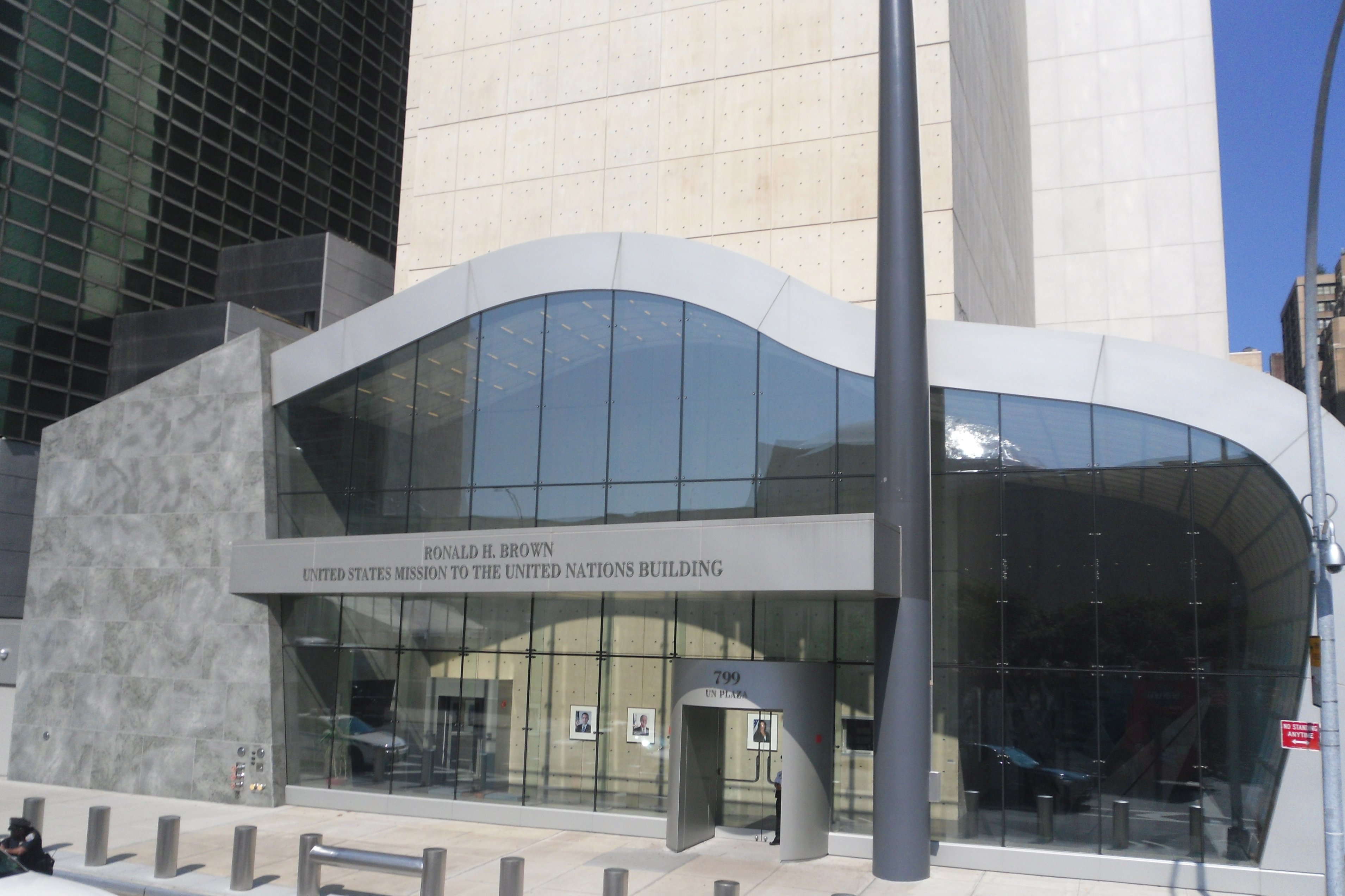
U.S. Mission to the U.N.  Source: Elmschrat CC
The United States has supported a Greek-sponsored UN resolution (A/RES/67/80) titled "Return or restitution of cultural property to the countries of origin."  The resolution (A/67/L.34), adopted by a consensus the General Assembly on December 12, urges nations to take antiquities trafficking seriously.  It was co-sponsored by 98 member states, including Canada, China, Italy, Mexico, Russia, Spain, and the United States.

A United Nations press statement remarked,"By the text, the Assembly deplored damage to world cultural heritage sites, particularly in recent conflict and crisis situations, and called for an immediate end to such acts, reminding States Parties to the 1970 Convention on the Means of Prohibiting and Preventing the Illicit Import, Export and Transfer of Ownership of Cultural Property of their obligations."

In his address to the UN General Assembly, Ambassador Anastassis Mitsialis of Greece said, "Despite concerted international efforts to tackle the problem, illicit traffic of cultural property continues to pose a serious threat to cultural heritage of States. This threat is higher in situations of crisis and conflict, when cultural objects are often smuggled outside their countries of origin."  Ambassador Mitsialis added that "interaction with the international art market in view of improving practices in various areas of expertise such as provenance, investigation, ethics and procedures of restitution proves to be of paramount importance."  Representatives from Argentina, Cyprus, Italy, and Turkey also spoke on the assembly floor in support of the resolution.

The resolution, in part, "Urges Member States to introduce effective national and international  measures to prevent and combat illicit trafficking in cultural property, including  publicizing legislation and offering special training for police, Customs and border services and to consider such trafficking a serious crime, as defined in the United Nations Convention against Transnational Organized Crime."  UNTOC, ratified by the U.S. in 2005, defines serious crime as "conduct constituting an offence punishable by a maximum deprivation of liberty of at least four years or a more serious penalty."

The UN resolution "Also recognizes the importance of cooperation among States in the fight against illicit trafficking of cultural property, as well as its illegal removal from the countries of origin, through, inter alia, the conclusion of bilateral agreements and  mutual legal assistance, including the prosecution of persons involved in such activities and extradition, in accordance with the laws of cooperating States and under applicable international law."

A video covering the introduction, discussion, and adoption of the resolution appears below (total time: 30 minutes).  The discussion references an August 1, 2012 report of the Director-General of the United Nations Educational, Scientific and Cultural Organization on the return or restitution of cultural property to the countries of origin, which can be viewed here.


This post is researched, written, and published on the blog Cultural Heritage Lawyer Rick St. Hilaire at culturalheritagelawyer.blogspot.com. Text copyrighted 2012 by Ricardo A. St. Hilaire, Attorney & Counselor at Law, PLLC. Any unauthorized reproduction or retransmission of this post is prohibited. CONTACT: www.culturalheritagelawyer.com

Thứ Năm, 5 tháng 1, 2012

Court Forfeits Cristo Portacroce After Italy Does Not File A Claim

The forfeited Cristo Portacroce.
Courtesy ICE
The United States District Court for the Northern District of Florida has ordered the forfeiture of the painting, the Cristo Portacroce Trascinato Da Un Manigoldo.  The court issued the default judgment once the previous possessors, Italy and its Brera Art Gallery, failed to make a claim for the return of the artwork.

The court's ruling was brief:  "Upon Application of the Plaintiff(s) in the above styled cause and having examined the records and there appearing to be no responsive pleadings filed by the defendant(s), default is hereby entered against the Italian Republic, Ministry of Culture, and the Pinacoteca di Brera, on January 3, 2012."

The painting will likely be handed over to the heirs of Federico Gentili di Giuseppe, who filed a claim on December 14, 2011 arguing that they were the lawful owners.  Prosecutors submitted information to the court that the painting was taken from the family by the Nazis during World War II.  Click here for details.

Federal officials seized the Cristo Portacroce in November 2011, which the Mary Brogan Museum of Art and Science in Florida had on loan.  See here for background.

Court papers filed by government lawyers show that the Italian's were aware that the painting's ownership was in dispute.  But the records do not explain why the Italy-Brogan loan agreement did not contemplate legal protection from seizure under the federal law known as Immunity from Seizure Under Judicial Process of Cultural Objects Imported for Temporary Exhibition or Display.

Thứ Sáu, 16 tháng 7, 2010

Operation Andromeda - Carabinieri Cultural Heritage Protection Command Press Release

CONDENSED PRESS STATEMENT (TRANSLATED FROM THE ITALIAN)
Unedited original available at
www.carabinieri.it/Internet/Cittadino/Informazioni/ComunicatiStampa/2010/Luglio/20100716_100000.htm

On July 16, 2010, the Carabinieri Cultural Heritage Protection Command presented to the press ... three hundred thirty seven exceptional archaeological finds, from Lazio, Puglia, Sardinia and Magna Graecia, dating between eighth century BC and fourth century AD, and returned from Geneva, Switzerland on June 25, 2010.

Among the many outstanding heritage items are ... loutrophoros, marble statues depicting the goddess Venus, Apulian and Attic volute craters, craters mask Canosa, kylix Chalkidiki, bronzes, frescoes from Pompeii, a basket and two nuraghic warriors, whose value is determined on the illicit market based on their size in centimeters (about ten thousand euros per centimeter).

The total asset value of the works exceeds fifteen million euros. The exhibits were seized earlier this year by the Swiss authorities and by the Carabinieri, as a result of an investigation commonly known as "Andromeda" in the free port of Geneva, where they were stored by an art dealer and a Japanese Swiss businessman ....

...

Thứ Ba, 4 tháng 5, 2010

A Renewed Memorandum of Understanding in the Context of US-Italian Foreign Relations

When we speak about the Cultural Property Advisory Committee (CPAC) process, we should acknowledge that it takes place in the context of broader American foreign policy objectives. Indeed, the process is spearheaded by the State Department, the international relations arm of government, with decisionmaking ultimately in the hands of the White House, which is constitutionally designated to carry out foreign affairs. This week it is expected that Washington will continue to demonstrate its awareness of foreign policy issues and consider the four determinations of the Cultural Property Implementation Act in the context of its foreign policy goals.

On May 6 and 7 the Cultural Property Advisory Committee will review the Memorandum of Understanding between the United States and Italy. Italy seeks to preserve its cultural heritage by renewing this MoU, which creates barriers to stop at-risk archaeoligical and ethnological objects from seeping through America's borders. The Archaeological Institute of America describes the upcoming CPAC hearings on its web site at
http://www.archaeological.org/webinfo.php?page=10573.

It is no secret that US-Italian relations have not been the strongest in recent years, so renewing the MoU could foster some degree of goodwill needed to embrace one of America's closest allies. Italy has provided some steps to support the US in the last several years that could merit some affirmation by the White House. These steps include, among others, the merger between Fiat and Chrysler that rescued the failing American automaker; the Italian troop commitment in Iraq, representing the fourth largest military contingent deployed to that country in support of US objectives; and Italy' willingness to receive some of the Guantanamo Bay detainees.

When issues such as the shooting death by US forces in 2005 of an Italian secret service agent--who was escorting a released Italian hostage in Baghdad--still loom large in the background of US-Italian relations; or when Italy remains unsettled by its unwilling demotion from prominent G-8 country to a lower-tiered G-20 nation, it may become important to strengthen US-Italian ties.  A renewed MoU between the US and Italy could therefore serve to refresh strained foreign relations.

Photo by NuclearVacuum.  CC license.

Thứ Năm, 14 tháng 1, 2010

Fakes and Forgeries

The Associated Press reported in today's NY Times that Italian authorities last year recovered thousands of looted art and antiquities valued at close to $240 million US dollars. The story said: "Police figures show the number of illegal archaeological excavations discovered in 2009 decreased dramatically, from 238 in 2008 to just 58 in 2009. But at the same time, the number of people charged with falsifying artwork rose more than 400 percent."

The fact is that forged art exists in the marketplace, and this newspaper report serves as a caution to stay alert. Authenticating artwork is an essential component to ethical collecting. One should take time to ensure that a piece is not just looted or illegally exported, but that it is genuine.

Bài đăng phổ biến