Hiển thị các bài đăng có nhãn UNESCO Convention (1970). Hiển thị tất cả bài đăng

Thứ Bảy, 11 tháng 5, 2013

U.S. Attorney Files Complaint to Forfeit Peruvian Artifacts Seized at Miami International Airport

Federal prosecutors in Miami on Friday filed a complaint to forfeit ancient artifacts from Peru. The office of U.S. Attorney Wilfredo Ferrer (right) alleges that Peruvian citizen Jean Combe Fritz transported 29 banned heritage objects on a flight to Miami International Airport on August 21, 2010. U.S. Customs and Border Protection (CBP) detained the items following a secondary examination of Combe's luggage that revealed "ancient indigenous artifacts."

The court pleading cites a violation of the Convention on Cultural Property Implementation Act (CPIA). The CPIA is the federal law that implements the 1970 UNESCO Convention on the Means of Prohibiting and Preventing the Illicit Import, Export and Transfer of Ownership of Cultural Property. Under the terms of the CPIA's Memorandum of Understanding (MoU) between the U.S. and Peru, designated cultural heritage materials from Peru are restricted from America's shores unless authorized.

The U.S. Attorney's verified complaint recites that Dr. Carol Damien Ferrer, Pre-Columbian art expert at Florida International University, concluded that the cultural objects were the kind of archaeological and ethnological material covered by the MoU. Luis Chang, Minister Counselor of the Embassy of Peru, also confirmed that the MoU covered the detained items.

Ferrer's office subsequently filed a forfeiture action in the U.S. District Court for the Southern District of Florida, asserting:
the United States has a reasonable basis to believe: that the defendant artifacts were produced by indigenous tribal people in Peru during the Pre-Columbian period, or in the Colonial period; that they are important to the cultural heritage of the Peruvian people; that they are designated Pre-Columbian and Colonial  textiles, metals, lithics, and perishable remains as listed in 19 C.F.R. 12.104(g) and are thus subject to export control by Peru.
The Defendant Artifacts were imported into the United States without any certification from Peru that the exportation of the artifacts from Peru was lawful under Peruvian law, as required by the CPIA, 19 U.S.C. § 2606(a).
The objects seized by CBP include a Moche bone carving (left), a 12 piece Inca burial bundle, an Early Horizon/Chavin stone carving, a Moche copper and bronze spatula, a Nazca mantle, and a Chimu weave fragment.


This post is researched, written, and published on the blog Cultural Heritage Lawyer Rick St. Hilaire at culturalheritagelawyer.blogspot.com. Text copyrighted 2010-2013 by Ricardo A. St. Hilaire, Attorney & Counselor at Law, PLLC. Any unauthorized reproduction or retransmission of this post is prohibited. CONTACT INFORMATION: www.culturalheritagelawyer.com

Thứ Hai, 25 tháng 3, 2013

U.S. Supreme Court Rejects ACCG's Coins Case

Photo credit: David Lat
The Ancient Coin Collectors Guild (ACCG) suffered another defeat as the U. S. Supreme Court declined to hear the trade organization's appeal. The case of ACCG v. U.S. Customs and Border Protection Agency, Department of Homeland Security et al. (docket 12-996) challenged America's import controls over Chinese and Cypriot cultural property.  The ACCG lost in both the federal district court and the circuit court of appeals before filing a petition for certiorari in the nation's highest court. The Supreme Court reviewed the ACCG's case on Friday and issued a ruling this morning denying certiorari.

The ACCG began the case in order to challenge the government's application of the Cultural Property Implementation Act (CPIA), the federal law that implements the 1970 UNESCO Convention on the Means of Prohibiting and Preventing the Illicit Import, Export, and Transfer of Ownership of Cultural Property. The trade organization imported ancient coins from a London dealer in 2009 that were minted in China and Cyprus. But they had no provenance and no description of their find spots. U.S. Customs and Border Protection (CBP) detained the coins under authority of CPIA import controls restricting ancient Chinese and Cypriot coins of a certain type. The ACCG then filed suit to challenge the cultural property import protections.

Today's Chasing Aphrodite interview with Peter Tompa, attorney for the ACCG, offers additional information about the ACCG's test case.

This post is researched, written, and published on the blog Cultural Heritage Lawyer Rick St. Hilaire at culturalheritagelawyer.blogspot.com. Text copyrighted 2012 by Ricardo A. St. Hilaire, Attorney & Counselor at Law, PLLC. Any unauthorized reproduction or retransmission of this post is prohibited. CONTACT: www.culturalheritagelawyer.com

Thứ Năm, 28 tháng 2, 2013

U.S.-Belize MoU Signed

Belize's Institute of Archaeology and the National Institute of Culture and History are reporting on their Facebook page the signing yesterday of a Memorandum of Understanding (MoU) between the United States and Belize, which enacts import protections on endangered cultural property entering the U.S.

Signing of MoU between Belize and the United States.  Source: NICH
Belize petitioned the U.S. for an MoU seeking import restrictions pursuant to the Cultural Property Implementation Act (CPIA) and Article 9 of the 1970 Convention on the Means of Prohibiting and Preventing the Illicit Import, Export and Transfer of Ownership of Cultural Property.  The Cultural Property Advisory Committee (CPAC) met in November 2011 to listen to public public comments regarding the adoption of import measures.

As of 5:00 p.m. on February 28, 2013, no notice or announcement describing the signing ceremony had been published in the Federal Register, posted on the U.S. State Department's Bureau of Educational and Cultural Affairs web site, or announced by the U.S. embassy in Belize.

This post is researched, written, and published on the blog Cultural Heritage Lawyer Rick St. Hilaire at culturalheritagelawyer.blogspot.com. Text copyrighted 2012 by Ricardo A. St. Hilaire, Attorney & Counselor at Law, PLLC. Any unauthorized reproduction or retransmission of this post is prohibited. CONTACT: www.culturalheritagelawyer.com

Thứ Sáu, 1 tháng 2, 2013

The 1970 Rule and the AAMD Guidelines

The Revisions to the 2008 Guidelines on the Acquisition of Archaeological Material and Ancient Art issued this week by the Association of Art Museum Directors (AAMD) requires study. Lee Rosenbaum's blog post titled "AAMD’s “Strengthened” Antiquities-Collecting Guidelines Boost the Loopholes" offers keen analysis at this early stage.

An additional observation worth highlighting is the AAMD's request for others--besides museums--to follow the 1970 rule.  The 1970 rule is described in the latest Revisions this way:

"The AAMD, along with others in the international community, including source countries, recognizes the date of this Convention [1970 UNESCO Convention on the Means of Prohibiting and Preventing the Illicit Import and Export and Transfer of Ownership of Cultural Property], November 17, 1970, as providing the most pertinent threshold for the application of more rigorous standards to the acquisition of archaeological materials and ancient art as well as for the development of a unified set of expectations for museums, sellers and donors."

Despite the AAMD's aspirations, the organization has not convinced many relevant governmental authorities to abide by the 1970 rule when cultural property forfeiture and repatriation claims are pursued. So it is not surprising to read the Revision's latest plea:

"The AAMD was encouraged in 2008 to see that the date of adoption of the UNESCO Convention was recognized not only by museums as a threshold for more rigorous analysis of acquisitions, but also by some countries as a voluntary limitation for enforcement of their cultural patrimony laws that predate the UNESCO Convention. The AAMD hopes that other countries will follow this precedent of voluntary restraint as the AAMD continues to encourage its members to pursue voluntary standards for acquisitions that are stricter than the requirements of applicable law.

The 1970 rule is laudable and worth promoting.  But how does the AAMD intend to convince domestic and foreign governmental authorities to follow it when the latest Revisions do not appear to go far enough to prevent the accession by museums of post-1970 looted, smuggled, or fraudulently sold antiquities?


This post is researched, written, and published on the blog Cultural Heritage Lawyer Rick St. Hilaire at culturalheritagelawyer.blogspot.com. Text copyrighted 2012 by Ricardo A. St. Hilaire, Attorney & Counselor at Law, PLLC. Any unauthorized reproduction or retransmission of this post is prohibited. CONTACT: www.culturalheritagelawyer.com

Thứ Năm, 20 tháng 12, 2012

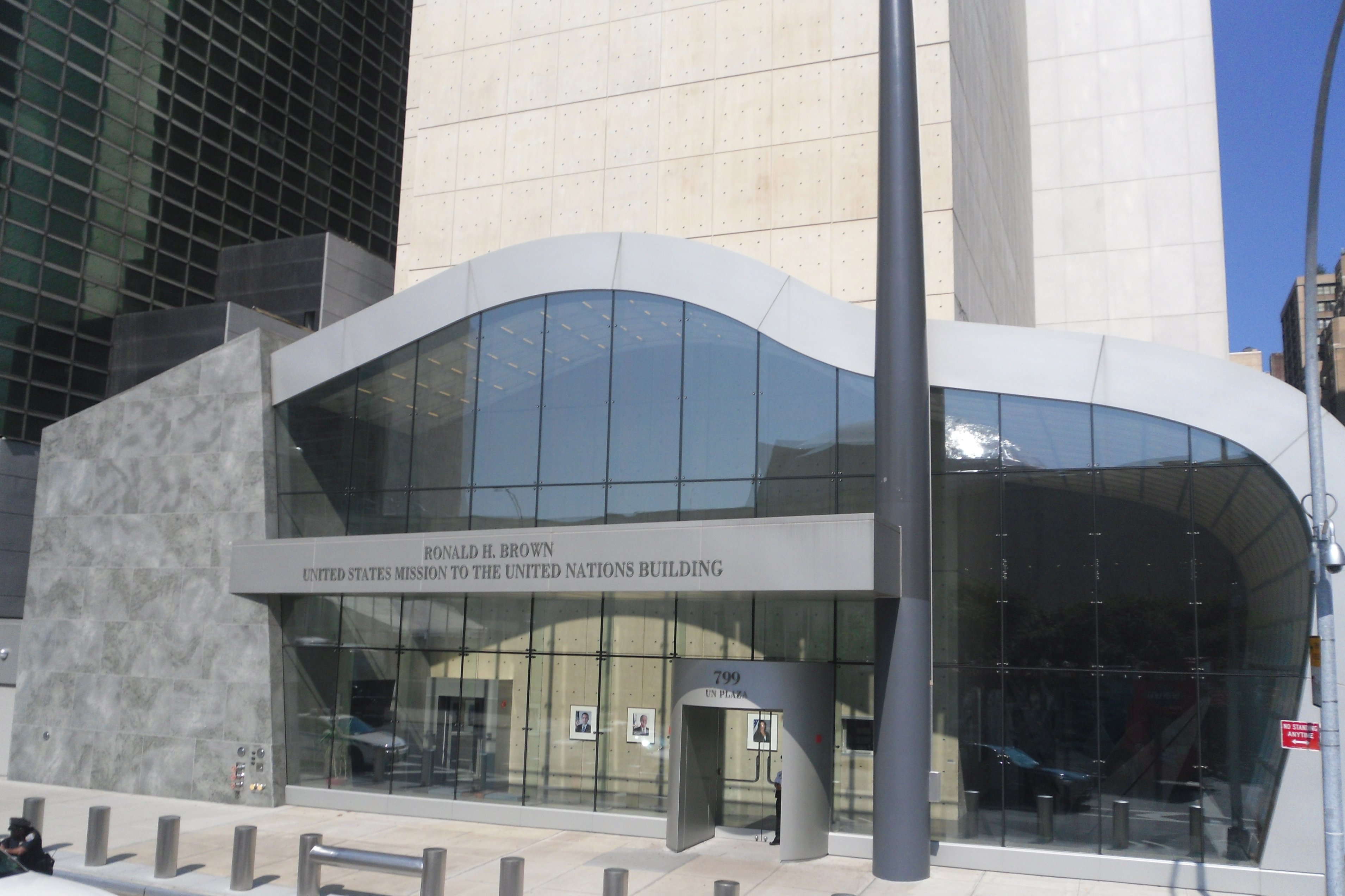
U.S. Supports U.N. Resolution Urging Countries to Take Antiquities Trafficking Seriously

U.S. Mission to the U.N.  Source: Elmschrat CC
The United States has supported a Greek-sponsored UN resolution (A/RES/67/80) titled "Return or restitution of cultural property to the countries of origin."  The resolution (A/67/L.34), adopted by a consensus the General Assembly on December 12, urges nations to take antiquities trafficking seriously.  It was co-sponsored by 98 member states, including Canada, China, Italy, Mexico, Russia, Spain, and the United States.

A United Nations press statement remarked,"By the text, the Assembly deplored damage to world cultural heritage sites, particularly in recent conflict and crisis situations, and called for an immediate end to such acts, reminding States Parties to the 1970 Convention on the Means of Prohibiting and Preventing the Illicit Import, Export and Transfer of Ownership of Cultural Property of their obligations."

In his address to the UN General Assembly, Ambassador Anastassis Mitsialis of Greece said, "Despite concerted international efforts to tackle the problem, illicit traffic of cultural property continues to pose a serious threat to cultural heritage of States. This threat is higher in situations of crisis and conflict, when cultural objects are often smuggled outside their countries of origin."  Ambassador Mitsialis added that "interaction with the international art market in view of improving practices in various areas of expertise such as provenance, investigation, ethics and procedures of restitution proves to be of paramount importance."  Representatives from Argentina, Cyprus, Italy, and Turkey also spoke on the assembly floor in support of the resolution.

The resolution, in part, "Urges Member States to introduce effective national and international  measures to prevent and combat illicit trafficking in cultural property, including  publicizing legislation and offering special training for police, Customs and border services and to consider such trafficking a serious crime, as defined in the United Nations Convention against Transnational Organized Crime."  UNTOC, ratified by the U.S. in 2005, defines serious crime as "conduct constituting an offence punishable by a maximum deprivation of liberty of at least four years or a more serious penalty."

The UN resolution "Also recognizes the importance of cooperation among States in the fight against illicit trafficking of cultural property, as well as its illegal removal from the countries of origin, through, inter alia, the conclusion of bilateral agreements and  mutual legal assistance, including the prosecution of persons involved in such activities and extradition, in accordance with the laws of cooperating States and under applicable international law."

A video covering the introduction, discussion, and adoption of the resolution appears below (total time: 30 minutes).  The discussion references an August 1, 2012 report of the Director-General of the United Nations Educational, Scientific and Cultural Organization on the return or restitution of cultural property to the countries of origin, which can be viewed here.


This post is researched, written, and published on the blog Cultural Heritage Lawyer Rick St. Hilaire at culturalheritagelawyer.blogspot.com. Text copyrighted 2012 by Ricardo A. St. Hilaire, Attorney & Counselor at Law, PLLC. Any unauthorized reproduction or retransmission of this post is prohibited. CONTACT: www.culturalheritagelawyer.com

Thứ Hai, 22 tháng 10, 2012

Appeals Court Sides with Federal Attorneys in ACCG Baltimore Coin Case

The Fourth Circuit Court of Appeals today sided with the United States in the Ancient Coin Collectors Guild (ACCG) Baltimore test case.   We "have reviewed the Guild's various claims and find them to be without merit," the judges wrote in their October 22 decision.

The court's unanimous decision in the case of Ancient Coin Collectors Guild v. U.S. Customs and Border Protection; U.S. Department of State; Assistant Secretary of State, Educational and Cultural Affairs, rejected the invitation to "engage in a searching review of the government's implementation of CPIA import restrictions on Chinese and Cypriot cultural property."  The judges exercised restraint, cautioning that "[a]ccepting such an invitation ... would draw the judicial system too heavily and intimately into negotiations between the Department of State and foreign countries, injecting the courts into an area of law covered by statutorily conferred executive discretion and congressional oversight."  The court added that "[s]uch judicial interference would be especially problematic because Congress has already prescribed civil forfeiture as a vehicle through which importers can challenge the seizure and detention of articles allegedly covered by CPIA restrictions."

The ACCG initiated the court action in order to challenge the federal government's application of the Cultural Property Implementation Act (CPIA). The CPIA is the law that implements the 1970 UNESCO Convention on the Means of Prohibiting and Preventing the Illicit Import, Export, and Transfer of Ownership of Cultural Property.  The ACCG imported ancient coins from a London dealer in 2009, transporting them to Baltimore, Maryland on a British Airways flight.  The coins were minted in China and Cyprus, but they had no provenance and no description of their find spots. U.S. Customs and Border Protection (CBP) detained the coins, sanctioned by the import restrictions placed on Chinese and Cypriot ancient coins.  The import restrictions were enacted pursuant to bilateral agreements negotiated between those countries and the United States under the authority of the CPIA.

The ACCG filed a civil action in federal district court attacking the import controls over ancient coins and lost.  It appealed the decision, and both the government and ACCG filed briefs before making oral arguments on September 19, 2012.  The court of appeals issued its written decision today.

While agreeing with the idea that "[c]oins are portable objects," the appeals court remarked "that is not the whole story." "The often worn and mysterious beauty of ancient coins renders them invaluable cultural artifacts, helpful not only in dating archaeological finds but in revealing how distant civilizations once conducted their civic and commercial life. Whether coins (or sculptures or pottery) should be exempted from coverage as cultural property presents a lively policy debate, but the tension is resolved for us through the medium of law."

In its decision, the appeals court provided a primer on the law supporting the CPIA regime and highlighted that the judiciary should only reluctantly insert itself in diplomatic negotiations or congressional action:

"Congress set out an elaborate statutory scheme for promulgating import restrictions on culturally sensitive items and gave the Executive Branch broad discretion in negotiating Article 9 [bilateral] agreements with foreign states. Congress itself retained oversight of the CPIA process ... and placed significant responsibility in the hands of CPAC [the Cultural Property Advisory Committee], a body composed of experts in the fields of archaeology and ethnology. Congress also provided forfeiture procedures through which importers could challenge any seizures made pursuant to the CPIA. The conclusions to be drawn from the entirety of this statutory scheme are clear. The federal judiciary has not been generally empowered to second-guess the Executive Branch in its negotiations with other nations over matters of great importance to their cultural heritage, to overrule CPAC in its conclusion that import restrictions on coins were necessary to protect the cultural patrimonies of Cyprus and China, or to challenge Congress in its decision to channel CPIA disputes through forfeiture proceedings."

The ACCG argued that the import restrictions placed on Chinese and Cypriot  ancient coins as well as their execution by the government were ultra vires (extralegal).  The coin collectors group also asserted that the government violated the Administrative Procedures Act (APA) and that it transgressed the First and Fifth Amendments of the U.S. Constitution.  The appellate court rejected each of these assertions.

The court of appeals, like the federal district court below, found that the conduct of the government had not been been ultra vires or extralegal as the ACCG had alleged.  Citing established case law, the court explained that the government only acts outside in an extra legal fashion when it "'is not doing the business which the sovereign has empowered him to do or he is doing it in a way which the sovereign has forbidden.'" (Citation omitted).  The court emphasized that it would not probe the foreign relations functions of the executive and congressional branches of government, writing:

"The [CPIA] statute . . . involves a sensitive area of foreign affairs where Congress itself has delegated the Executive Branch significant discretion.  Given that approach, a searching substantive review of the State Department's diplomatic negotiations or CPAC's application of its archaeological expertise would be singularly inappropriate in this forum."

The federal appeals court pointed to specific examples of how authorities followed the CPIA appropriately with regard to Chinese import restrictions, and the fourth circuit sided with the lower federal district court by repeating  that the State Department "complied with the statutory requirements in placing import restrictions on Cypriot coins."

Despite compliance with the CPIA, the fourth circuit judges considered the ACCG's allegation that China did not make a request for bilateral protection of ancient coins--an assertion disputed by the government. The court looked beyond this charge, writing "In making this argument ... the Guild seeks to add a provision to the statute that is simply not there, namely a requirement that a request ... 'include a detailed accounting of every item eventually covered by an ... agreement.'"  (Citation omitted). The court made clear that a request by a foreign government for U.S. protection of cultural property under the CPIA "need not include a comprehensive list" of every archaoelogical and ethnological object included in a final bilateral agreement. To say otherwise, the court wrote, is a burden that "Congress nowhere mentioned ...."

By the same rationale, the appeals court rejected any contention that the State Department was required to publish in advance a detailed list of every cultural object that might have been considered for import protections under the CPIA. "To scrutinize the adequacy of the State Department's publication and require a verbatim publication of a foreign request would involve the judiciary in the very early stages of the CPIA process and place upon the State Department a burden that Congress did not intend," the court wrote.  The appeals court judges observed that the "detail required by the statute at the conclusion of the process is altogether different from the level of detail required before negotiations between our country and another nation have even so much as begun," making note that "Congress sought to strike a balance here between the need for notice and transparency on the one hand, and the need for confidentiality in sensitive matters of diplomacy on the other."

The court addressed the ACCG's further complaint "that State and CBP acted ultra vires by placing import restrictions on all coins of certain types without demonstrating that all coins of those types were 'first discovered within' China or Cyprus."  The court disagreed by explaining that "State and CBP are under no obligation to list restricted items with more specificity than the statute commands, and they are certainly not required to impose restrictions on a coin-by-coin basis. Such a requirement would make the statutory scheme utterly unworkable in practice."

The circuit court acknowledged that there will be cultural objects imported into the U.S. without provenance or export permits, but that there is a process that allows importers to show that the objects are legal: "In those cases, the statute expressly provides that CBP may seize the articles at the border: 'If the [importer] of any designated archaeological or ethnological material is unable to present to the customs officer' the required documentation, the 'officer concerned shall refuse to release the material from customs custody . . . until such documentation or evidence is filed with such officer.' 19 U.S.C. § 2606(b). In short, CBP need not demonstrate that the articles are restricted; rather, the statute 'expressly places the burden on importers to prove that they are importable.'" (Citation omitted).

The court implied that the burden of proof imposed on importers by the CPIA is not as high as might be suggested because "[t]he importer need not document every movement of its articles since ancient times. It need demonstrate only that the articles left the country that has requested import restrictions before those restrictions went into effect or more than ten years before the date of import."  The court commented that "the Guild need not have documented every movement of its coins since ancient times. To comply with § 2606 [of the CPIA], the Guild need demonstrate only that the Cypriot coins left Cyprus prior to 2007 and that the Chinese coins left China prior to 2009. It never so much as attempted to do so."

Attending to the ACCG's argument that the Administrative Procedures Act was violated, the court rejected this claim.  "We have emphasized throughout the restricted scope of judicial review when it comes to the statutory discretion Congress has conferred upon the Executive Branch in carrying out the international obligations of the United Sates under the Convention. These cautions are nowhere more pertinent than where this nation's protection and recognition of another's cultural patrimony is involved. Congress recognized that the CPIA 'is important to our foreign relations, including our international cultural relations,' and it enacted the statute to ensure that the United States did not become an illegal market for foreign cultural property, a development that would have 'severely strain[ed] our relations with the countries of origin, which often include close allies.' S. Rep. 97-564, at 23 (1982)."  The court added, "Even were we to assume that State was fully subject to the APA, none of its actions were remotely arbitrary or capricious."  The court concluded that CBP acted appropriately as well.

The appeals court also took up the constitutional issues raised by the ACCG.  It relied on the district court's conclusion, in part, that "'the government's interest in combating the pillage of archaeological materials is unrelated to the suppression of free expression.'"  Moreover, due process claims would be addressed by forfeiture proceedings where the government would be required to outline its arguments supporting the seizure of the imported cultural objects, and where the "Guild must then demonstrate that its coins are not subject to forfeiture in order to prevail."

UPDATE 11/14/12: The ACCG filed a petition on November 13, 2012 for rehearing en banc in the matter.  A rehearing before the full court of appeals (en banc) is usually rejected unless the case is of great significance.


This post is researched, written, and published on the blog Cultural Heritage Lawyer Rick St. Hilaire at culturalheritagelawyer.blogspot.com. Text copyrighted 2012 by Ricardo A. St. Hilaire, Attorney & Counselor at Law, PLLC. Any unauthorized reproduction or retransmission of this post is prohibited. CONTACT: www.culturalheritagelawyer.com

Thứ Sáu, 13 tháng 7, 2012

U.S. Renews MoU Import Controls on Cultural Heritage From Cyprus

Byzantine glass lamp.  U.S. State Dept.
U.S. Customs and Border Protection and the U.S. Treasury Department today published notice of America's extension of import controls governing archaeological and ethnological materials from Cyprus.

The decision renews a Memorandum of Understanding (MoU) between the United States and Cyprus, which serves to protect cultural patrimony in jeopardy from pillage under the terms of the Cultural Property Implementation Act (CPIA).  The CPIA implements the1970 UNESCO Convention on the Means of Prohibiting and Preventing the Illicit Import, Export and Transfer of Ownership of Cultural Property.  Import protections granted under a Memorandum of Understanding--also known as a bilateral agreement--last for five years and may be renewed.

The import restrictions forbid designated cultural objects from importation into the United States unless authorized by permit.  Categories of cultural property protected under the renewed import protections include archaeological objects such as ceramics, sculpture, architecture, jewelry and coins from pre-classical and classical periods.  Other import controls regulate ecclesiastical and ritual ethnological materials such as liturgical crosses, painted icons, glass church lamps, and mosaics from the Byzantine and post-Byzantine periods.

Comments submitted earlier this year to the Cultural Property Advisory Committee (CPAC) in support and opposition to renewing import controls may be found here.

CONTACT: www.culturalheritagelawyer.com

Thứ Sáu, 6 tháng 1, 2012

Documentary - "Fighting Illicit Traffic of Cultural Heritage in South Eastern Europe"

UNESCO has produced the short documentary below titled "Fighting Illicit Traffic of Cultural Heritage in South Eastern Europe."  The report is especially relevant as the Cultural Property Advisory Committee (CPAC) this month considers requests by Bulgaria and Cyprus for cultural property protections under the Cultural Property Implementation Act (CPIA).


CONTACT: www.culturalheritagelawyer.com

Thứ Ba, 6 tháng 12, 2011

MoU Extended With Bolivia - US Customs Issues Final Rule

Tamucumira Mask.
One of the Bolivian objects subject to
CPIA import regulations.
Photo courtesy US State Dept.
The US government has extended import protections over archaeological and ethnological objects from Bolivia. The two governments entered into a bilateral agreement  in 2001 pursuant to the Cultural Property Implementation Act (CPIA), which gives force to the 1970 UNESCO Convention (the Convention on the Means of Prohibiting and Preventing the Illicit Import, Export, and transfer of Ownership of Cultural Property). Import restrictions under the agreement last five years and may be renewed each period.

Bolivia received emergency protection under the CPIA in 1989.  A bilateral agreement, or Memorandum of Understanding (MoU), was finalized in 2001, and the US government renewed that MoU in 2006.  The latest renewal occurred earlier this year.  The Federal Register reports:

"On August 26, 2011, after reviewing the findings and recommendations of the Cultural Property Advisory Committee, the Acting Assistant Secretary for Educational and Cultural Affairs, United States Department of State, concluding that the cultural heritage of Bolivia continues to be in jeopardy from pillage of certain archaeological and ethnological materials, made the necessary determination to extend the import restrictions for an additional five years. On November 10, 2011, diplomatic notes were exchanged reflecting the extension of those restrictions for an additional five-year period."

On December 1, 2011, US Customs and Border Protection published its final rule describing the specific import regulations.  The rule may be found here.

Thanks go to Gary Nurkin for news of the rule's publication.

Thứ Năm, 1 tháng 12, 2011

US-Greece MoU Produces Final Cultural Property Import Protection Rule

United States Customs and Border Protection today issued the final administrative rule covering import restrictions covering archaeological and ethnological material from Greece. The rule follows the July 17, 2011 adoption of a memorandum of understanding (MoU) between the United States and Greece under the Cultural Property Implementation Act in accord with the 1970 UNESCO Convention on the Means of Prohibiting and Preventing the Illicit Import, Export, and Transfer of Ownership of Cultural Property. The MoU entered into force on November 21, 2011 and can be found here.

Greek mosaic.
Source: Bijan.  CC.
Import protections are now in place on Greek archaeological and ethnological cultural items dating from around 20,000 B.C. through the 15th century A.D. These restrictions last for five years and were instituted in order to "control illegal trafficking of such articles in international commerce" and to protect "endangered cultural property," according to the rule.

Ancient objects subject to seizure at the American border include those made of stone, metal, ceramic, bone, ivory, glass, faience, textile, papyrus, paint, mosaic, wood, glass, and parchment. The import restrictions cover sculptures, sarcophagi, reliefs, furniture, vessels, tools, weapons and armor, coins, beads, pottery, musical instruments, documents, paintings, floor mosaics, and more.

Lawful entries of these specified cultural objects are permitted in certain cases. For example, a valid export permit from Greek authorities would allow an archaeological or ethnological cultural object to enter the US border.

The Federal Register has published the rule at 19 CFR Part 12.  Click here for the full text.

Bài đăng phổ biến