Hiển thị các bài đăng có nhãn Mexico. Hiển thị tất cả bài đăng

Thứ Năm, 20 tháng 12, 2012

U.S. Supports U.N. Resolution Urging Countries to Take Antiquities Trafficking Seriously

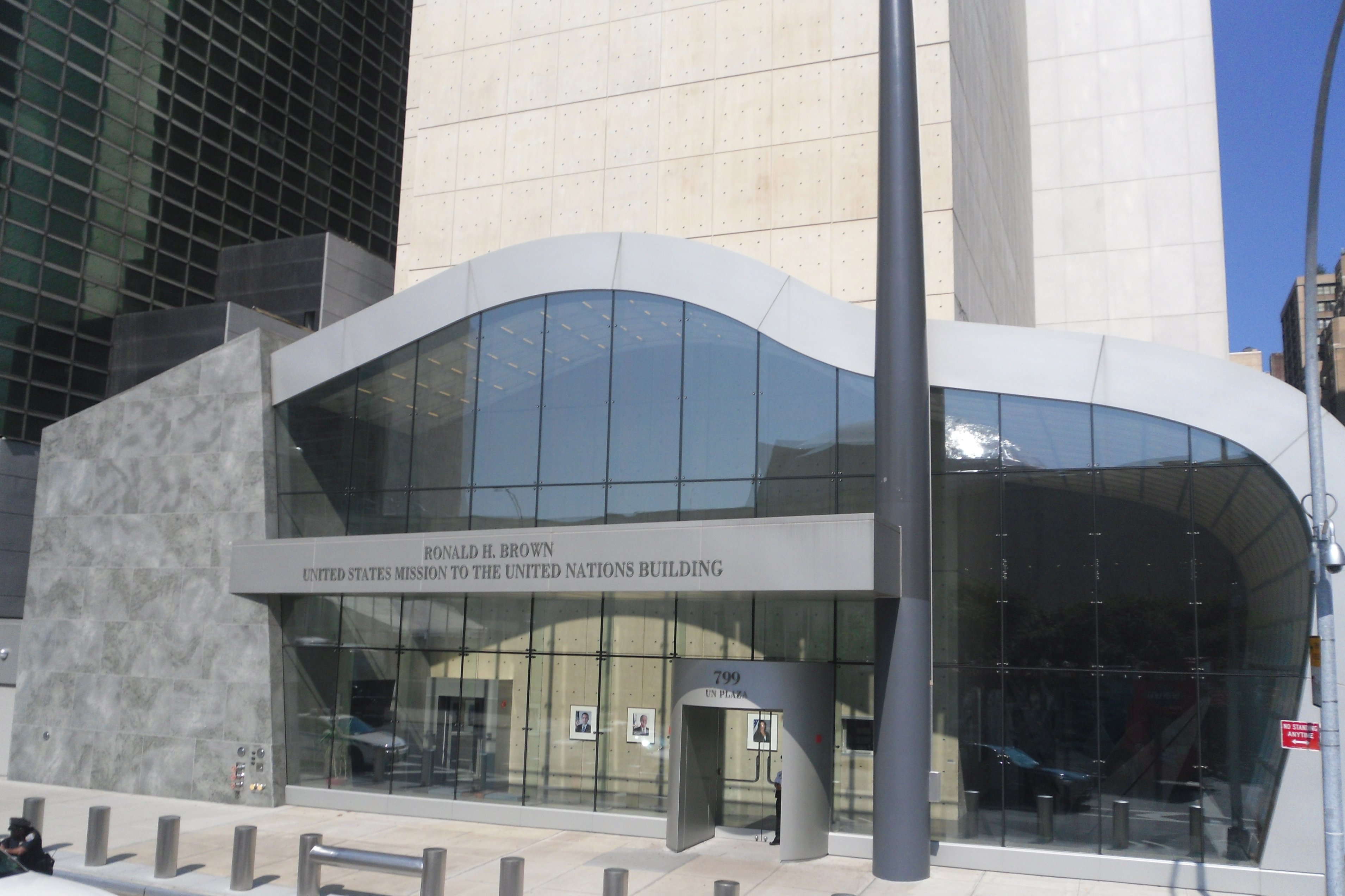
U.S. Mission to the U.N.  Source: Elmschrat CC
The United States has supported a Greek-sponsored UN resolution (A/RES/67/80) titled "Return or restitution of cultural property to the countries of origin."  The resolution (A/67/L.34), adopted by a consensus the General Assembly on December 12, urges nations to take antiquities trafficking seriously.  It was co-sponsored by 98 member states, including Canada, China, Italy, Mexico, Russia, Spain, and the United States.

A United Nations press statement remarked,"By the text, the Assembly deplored damage to world cultural heritage sites, particularly in recent conflict and crisis situations, and called for an immediate end to such acts, reminding States Parties to the 1970 Convention on the Means of Prohibiting and Preventing the Illicit Import, Export and Transfer of Ownership of Cultural Property of their obligations."

In his address to the UN General Assembly, Ambassador Anastassis Mitsialis of Greece said, "Despite concerted international efforts to tackle the problem, illicit traffic of cultural property continues to pose a serious threat to cultural heritage of States. This threat is higher in situations of crisis and conflict, when cultural objects are often smuggled outside their countries of origin."  Ambassador Mitsialis added that "interaction with the international art market in view of improving practices in various areas of expertise such as provenance, investigation, ethics and procedures of restitution proves to be of paramount importance."  Representatives from Argentina, Cyprus, Italy, and Turkey also spoke on the assembly floor in support of the resolution.

The resolution, in part, "Urges Member States to introduce effective national and international  measures to prevent and combat illicit trafficking in cultural property, including  publicizing legislation and offering special training for police, Customs and border services and to consider such trafficking a serious crime, as defined in the United Nations Convention against Transnational Organized Crime."  UNTOC, ratified by the U.S. in 2005, defines serious crime as "conduct constituting an offence punishable by a maximum deprivation of liberty of at least four years or a more serious penalty."

The UN resolution "Also recognizes the importance of cooperation among States in the fight against illicit trafficking of cultural property, as well as its illegal removal from the countries of origin, through, inter alia, the conclusion of bilateral agreements and  mutual legal assistance, including the prosecution of persons involved in such activities and extradition, in accordance with the laws of cooperating States and under applicable international law."

A video covering the introduction, discussion, and adoption of the resolution appears below (total time: 30 minutes).  The discussion references an August 1, 2012 report of the Director-General of the United Nations Educational, Scientific and Cultural Organization on the return or restitution of cultural property to the countries of origin, which can be viewed here.


This post is researched, written, and published on the blog Cultural Heritage Lawyer Rick St. Hilaire at culturalheritagelawyer.blogspot.com. Text copyrighted 2012 by Ricardo A. St. Hilaire, Attorney & Counselor at Law, PLLC. Any unauthorized reproduction or retransmission of this post is prohibited. CONTACT: www.culturalheritagelawyer.com

Thứ Tư, 7 tháng 11, 2012

Defendants Plead Guilty in Stolen and Switched Matisse Painting Case

A pair indicted for their role in receiving a stolen Henri Matisse painting will be sentenced following a guilty plea hearing held on October 30.  A federal grand jury in Miami handed up indictments in July against Pedro Antonio Marcuello Guzman and Maria Martha Elisa Ornelas Lazo for their involvement with the Odalisque in Red Pants, reported stolen from the Caracas Museum of Contemporary Art (Museo de Arte Contemporaneo de Caracas (MACCSII)) in Venezuela in or around December 2002.

Henri Matisse
The two signed off on proffers that describe their role in the possession, transportation, and sale of the painting.  The proffers state that Marcuello Guzman brokered the sale of the $3+ million painting to undercover FBI agents for a discounted price of $740,000.  Ornelas Lazo later flew from Mexico City to Miami International Airport carrying the Matisse painting in a tube.  The proffers go on to describe the following details of the transfer, switch, and sale of the artwork:

" ... Ornelas and co-conspirator Marcuello met the FBI under cover agents ("UCs") at a Miami Beach restaurant. During the meeting . . . Ornelas explained that she had taken multiple precautions to minimize being stopped by U.S. Customs and to minimize being inspected, such as in the manner of her packing, dressing lightly, and bringing no food into the U.S. Ornelas admitted taking the photographs of the painting that were sent to the UC's. Ornelas advised that she was present for prior inspections when experts inspected the painting and found it to be authentic. Ornelas added that one specialist said the painting was worth $3.7 million. During the meeting, Ornelas indicated that the experts were nervous because they seem to be aware of the painting's history. When one of the UCs asked if the experts were nervous because the painting was stolen, Ornelas replied affirmatively. During the meeting, Ornelas stated that she knew everything in regards to the painting.

"The following day, July 17, 2012, co-conspirator Marcuello, Ornelas, and the UCs met at a Miami Beach hotel to conduct the sales transaction for the stolen Henri Matisse painting. ...

"During the July 17, 2012 transaction, Ornelas advised the UCs that she had researched the history of the stolen painting online when it showed up years ago at her residence in Mexico. Ornelas further indicated that she had had the painting inspectedby experts in Mexico City, but that none had been willing to authenticate the painting in writing given its origins [referring to the painting having been stolen.]  Ornelas stated that employees at the museum in Caracas had done a "switch'' [referring to the replacement of the original painting with an imitation].

"At the conclusion of the July 17, 2012 meeting, the UCs agreed to purchase the painting and followed through with an ostensible attempt to conduct a wire transfer payment to a bank account supplied to the UCs by Ornelas. Ornelas and co-conspirator Marcuello were then arrested and the painting seized."


This post is researched, written, and published on the blog Cultural Heritage Lawyer Rick St. Hilaire at culturalheritagelawyer.blogspot.com. Text copyrighted 2012 by Ricardo A. St. Hilaire, Attorney & Counselor at Law, PLLC. Any unauthorized reproduction or retransmission of this post is prohibited. CONTACT: www.culturalheritagelawyer.com

Thứ Bảy, 4 tháng 2, 2012

State Department Grants Seizure Immunity to Mexican Artifacts

The State Department’s Bureau of Educational and Cultural Affairs last week granted immunity from judicial seizure to artifacts on loan from Mexico.  The pieces will be part of a 2012 exhibition called "Children of the Plumed Serpent: The Legacy of Quetzalcoatl in Ancient Mexico," which will take place at the Los Angeles County Museum of Art in California and at the Dallas Museum of Art in Texas.

Under the federal statute known as Immunity from Seizure Under Judicial Process of Cultural Objects Imported for Temporary Exhibition or Display (22 USC § 2459), foreign lenders are encouraged by Congress to lend cultural objects to museums without risk that those objects will become targets of litigation while on American soil.  The statute protects imported objects determined to be (1) of cultural significance, (2) intended for temporary, nonprofit exhibition, and (3) in the national interest.

Museums importing objects for temporary display must apply for this legal protection.  The notice of immunity is then published in the Federal Register.

Xochicalco temple of the plumed serpent. Photo: Giovani V; CC.


CONTACT: www.culturalheritagelawyer.com

Thứ Tư, 17 tháng 8, 2011

Seizure of Mexican Figurine Prompts Question of CBP's Legal Authority

United States Customs and Border Protection (CBP) announced in a new(s) release on July 28, 2011 that it seized a Pre-Columbian artifact en route from Indiana to British Columbia. A buyer in Canada reportedly purchased the small orange Nayarit figure of a woman through an auction, and CBP agents intercepted the package in April during routine checks at Chicago's O'Hare Airport. CBP said that the shipment was "manifested as containing an artifact."

CBP and Immigration and Customs Enforcement-Homeland Security Investigations (HSI) had the Chicago Field Museum examine the object, concluding it "to be an authentic Pre-Columbian artifact of West Mexico dating to the early first millennium AD." The Consulate General of Mexico, meanwhile, claimed that the object was unlawfully exported from that country.

CBP seized the four inch tall Nayarit figurine under Title 19, Chapter 14 of the customs laws. The statute is commonly referred to as the Convention on Cultural Property Implementation Act (CPIA), meant to implement the well-known 1970 UNESCO Convention that covers cultural property. Federal agents in Chicago took the ancient Mexican artifact into their possession under Section 2609 of the CPIA, which permits seizure of protected cultural artifacts covered by import regulations promulgated under section 2606 (as well as stolen objects that had been documented in the institutional collection of a state party to the convention). Import restrictions enacted under Section 2606 result when the United States enters into an agreement with another nation under the authority of the CPIA. Many readers of this blog are familiar with the CPIA process and know that several nations have bilateral agreements with the United States pursuant to CPIA. Mexico, however, is not one of those nations.

So how can CBP take away an ancient Mexican cultural object from its possessor by using the CPIA? I called CPB to find out. The agency's representatives were polite and responsive to calls, but the replies were not helpful. A CBP Associate Chief Counsel said that "we don't comment on anything like this," adding that "we limit any of our comments about the law and our interpretation on the law to our client itself, which is, of course, the agency." Such a closed response from a government agency that actively sought public attention to this seizure and freely declared the legal basis for the seizure is unsatisfactory. CBP issued a public press release announcing the taking of the Nayarit figurine and broadcasted that "[t]he artifact will be returned to the Mexican government in an upcoming CBP and ICE-HSI repatriation ceremony." And while the agency claims the matter is under investigation, CBP's desire to return potential evidence to Mexico, coupled with its early public release of information relevant to the case, does not signal a meaningful commitment to maintain the integrity of the investigation.

We are left to speculate about what CBP may have been thinking when it seized the object. Federal officials could not have seized the Mexican artifact under a legal theory involving the National Stolen Property Act because the NSPA requires an item to have a value of $5000 or more before it is considered stolen under that law. The Mexican artifact was purchased at auction for $550, far less than $5000. So CBP had to look for other legal authority to take the artifact into custody.

Perhaps they erringly looked to a treaty for legal authority? The United States and Mexico entered into a Treaty of Cooperation on March 24, 1971, which provides for the recovery and return of stolen archaeological, historical, and cultural properties. The treaty, which is in force today, permits the United States "to employ the legal means at its disposal to recover and return from its territory stolen archaeological, historical and cultural properties that are removed after the date of entry into force of the Treaty from the territory of the requesting Party." But this agreement was not enacted into law under the terms of the CPIA, meaning there are no import restrictions on Mexican cultural property that derive from Section 2606 of the CPIA to justify a Section 2609 seizure of the Nayarit figurine by CBP.

So what exactly was CPB's legal authority to seize the Nayarit figurine? We have no explanation about why a Section 2609 seizure was the proper legal basis to take away the ancient Mexican artifact.

Federal officials must take great care when using unexplained interpretations of the law to promote seizures of property. While CBP may be commended for taking action to detect trafficked cultural heritage, federal authorities should exercise their authority in a reasonable, intelligent, and open fashion. No citizen should be left guessing about how exactly he or she can comply with the law so as to avoid the loss of property. Clear and reasonable applications of the customs laws, and plain explanations to back them, can build public support for America's effort to protect and secure at-risk cultural property. By contrast, offering questionable or undisclosed legal positions in cases where property may be seized—particularly in cases involving potentially innocent possessors—does little to garner confidence in public authorities.

Photo: Chicago CBP

Bài đăng phổ biến